
Possum Laws in South Australia
Possum laws South Australia applies are short, strict and widely misunderstood. Possums are protected native animals, trapping one needs a permit, and a trapped possum cannot be taken anywhere. This guide sets out what the Department for Environment and Water actually requires, what a householder may do without a permit, and why the rules are written the way they are.
- StatusProtected, National Parks and Wildlife Act 1972
- TrappingPermit, or a permitted controller
- WhereInside a building only, never the garden
- ReleaseSame property, within 50 m, within 24 hours
- RelocationNot permitted, no permit exists for it
Are possums a protected species in SA?
Yes. Every possum species in South Australia is protected by the National Parks and Wildlife Act 1972, and the department is explicit that a roof possum is a protected native animal, not a pest. The common brushtail, which is the one in Adelaide ceilings, is also listed as rare in the Act's threatened species schedules, because its range outside the Adelaide region has shrunk.
Protection means the animal cannot be harmed, killed, kept or interfered with except under a permit. The department's possums page and its managing possums page are the sources for every rule here.
What permit is required to trap and remove a possum?
A trap and release permit issued by the Department for Environment and Water, or the services of a possum controller who holds one. Two conditions follow from the permit itself. The possum must be living in a building, since trapping in a garden is unlawful, and proofing the building must be done alongside the trapping, because the department treats trapping alone as no solution.
Councils and hire companies lend traps, and the department says to get the permit before borrowing one.
What is the relocation distance rule, and why does it exist?
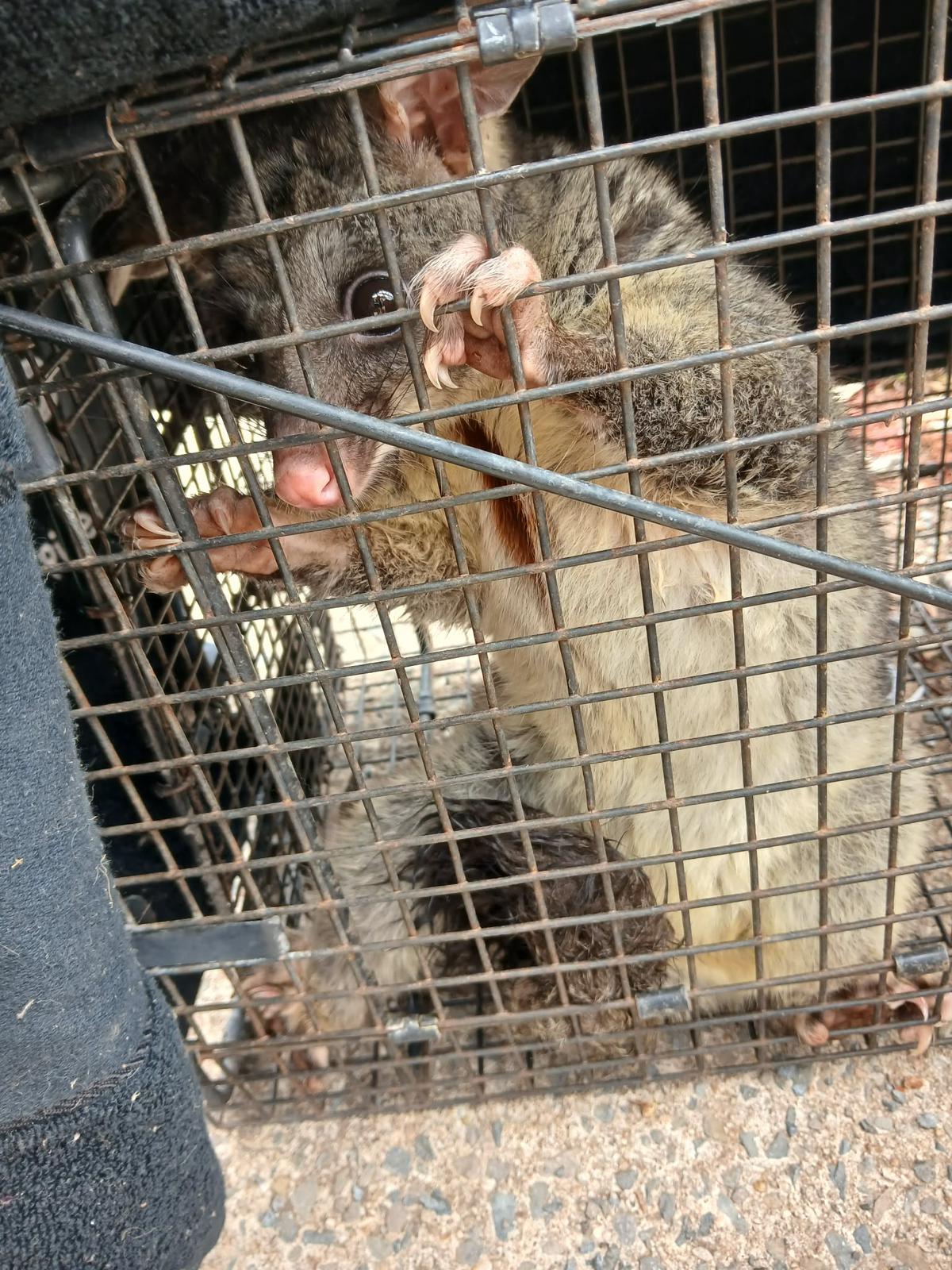
A trapped possum must be released on the same property it was caught on, within 50 metres of the capture site, within 24 hours of being trapped, and after dusk. The reason is territory: brushtails hold and defend a home range, and the department's own wording is that relocation often results in the death of the possum through competition for food and shelter with possums that will defend their area aggressively.
The rule surprises people because it means the possum is not leaving. It goes back to the tree it already lives in, fifty metres from your ceiling. That is why the fix is exclusion, not removal.
What can you legally do yourself?
Everything that does not involve touching the animal. The department's own list for possums in roofs is to block entry points, create one-way exits, trim overhanging branches, and put up nest boxes in the garden as alternative homes. For gardens it adds netting, tree collars, deterrents and bringing pet food in at night.
Allowed, no permit
- Watch for the possum to leave at dusk and close the gap once the roof is empty.
- Fit a one-way exit so it can go out and not come back.
- Cut back branches touching the roof, fence or gutters.
- Put up a nest box as an alternative home.
Needs a permit, or is never allowed
- Setting a trap of any kind, including a borrowed council trap, without a permit.
- Trapping a possum in the garden rather than inside a building.
- Releasing it more than 50 metres from the house, or off the property.
- Keeping it past 24 hours, or letting it go in daylight.
- Killing, poisoning or injuring a possum anywhere on mainland SA.
What can you not do, and what are the penalties?
You cannot destroy a possum living in your roof. The department states that a permit to destroy possums is available only on Kangaroo Island, only for brushtails; on the mainland there is no such permit. You cannot trap without a permit, trap in a garden, relocate the animal off your property, or release it more than 50 metres away, and each of those is an offence under the Act.
Penalty amounts sit in the Act and its regulations rather than on the department's public pages, so this guide does not quote figures. Harming a protected animal, or trapping one without a permit, is prosecutable, and a cage and a drive to a reserve carries a legal risk on top of the harm to the animal.
Source: Department for Environment and Water, Possums and Managing possums pages, accessed 6 September 2026.
Why does relocating a possum far away usually kill it?
Because there is no empty possum habitat to drop it into. Every patch of suitable trees in and around Adelaide already has a resident brushtail, and residents fight. A possum released into another animal's range does not know the food trees, the hollows or the escape routes, and is driven out by the possum that does. The department calls it competition; on the ground it is an animal that starves.
There is a second effect. The territory the possum left behind, which includes your roof, does not stay empty. A neighbouring possum takes it over, and if the roof is still open that possum moves in.
 Released on site, after dusk
How does a licensed removal actually comply?
By following the permit conditions to the letter and pairing them with the proofing the department insists on. Symes SA holds the permit for trap and release work, so the trap goes inside the building only, is set at dusk and checked at dawn, and the possum is released on your property within 50 metres of the trap, after dusk, the same day. The entry it used is closed on the visit and the rest of the roof is quoted as proofing.
Where a one-way door does the job instead of a trap, the possum removes itself and no handling is involved at all. Either way the animal stays in its range, your roof stops being part of it, and the paperwork is a certified taxable invoice rather than a fine.
- Permit heldTrap and release done under the department's permit conditions.
- Building onlyTraps go in the roof or structure, never in the garden.
- Dusk set, dawn checkNo animal left in a trap through the day.
- 50 m, 24 hours, after duskReleased on your property, in its own range, the same evening.
- Proofing alongsideEntry closed on the visit; the department's condition and ours.
Costs are split out on the possum removal cost page, the free possum removal page answers the council question honestly, and the sealing is described under roof possum proofing.
Possum laws South Australia: the questions people ask before they act
Are possums protected in South Australia?
Yes, all species, by the National Parks and Wildlife Act 1972. The common brushtail is additionally listed as rare in the Act's schedules because of its decline outside the Adelaide region. Protection means a possum cannot be harmed, killed, kept, trapped or moved except under a permit.
Can I trap a possum myself?
Only with a trap and release permit from the Department for Environment and Water, and only if the possum is living inside a building. Trapping in the garden is unlawful with or without a permit. With the permit you must set at dusk, check at dawn, keep the animal out of daylight, and release it within 24 hours, after dusk, within 50 metres, on your own property.
How far can a possum be relocated?
Fifty metres from where it was caught, and not off the property. The department states that no permit exists to relocate a possum away from your property and that releasing one more than 50 metres from your home is unlawful.
What are the penalties for harming a possum?
Harming, killing or trapping a protected animal without a permit is an offence under the National Parks and Wildlife Act 1972 and can be prosecuted. The department does not publish the penalty figures on its possum pages, so this guide does not quote them; the Act and its regulations set the amounts.
Do I need a permit?
To trap, yes. To block an entry after the possum has left, fit a one-way exit, cut branches, net a tree or put up a nest box, no. Most households never need the permit, because the legal fix is exclusion, and a licensed operator who trap-and-releases under their own permit covers the rest.
Want it done within the law and done once? Book a licensed removal.
Permit held, released on your property after dusk, entry closed on the visit. Certified taxable invoice, warranty in writing.