Solar Panel Bird Proofing: Full Specification
Solar panel bird proofing Adelaide installers offer varies more than the price suggests, and the differences are in the material and the fixing. This page is the specification Symes SA works to: what the mesh is made of, how it is cut and fixed, why nothing is drilled, what happens on install day, and what the 25 year product warranty covers. The service overview and the reasons to do it are on the solar and roof proofing pillar; this is the detail underneath it.
The mesh: what is the gauge, the coating, and why does PVC matter?
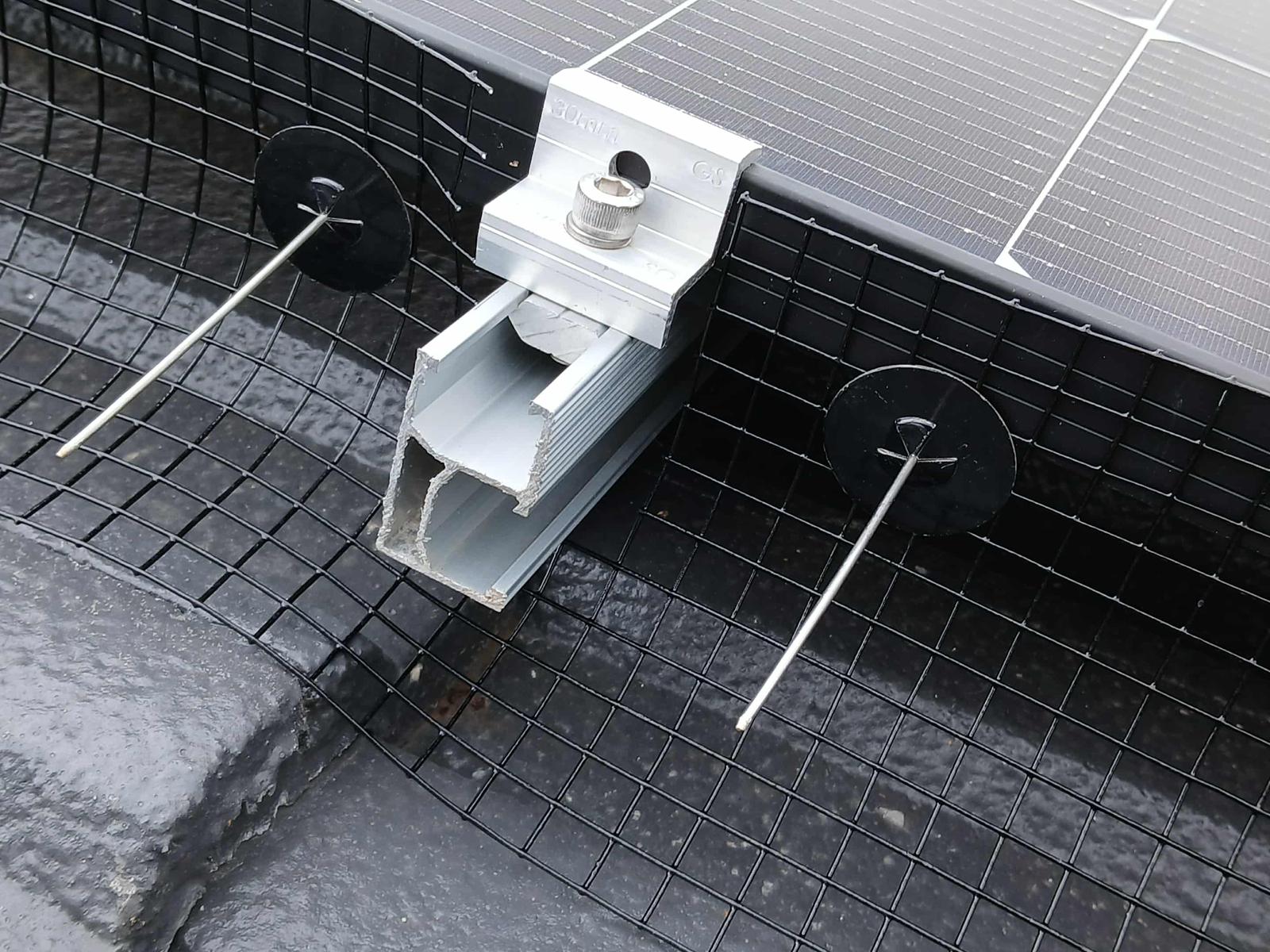
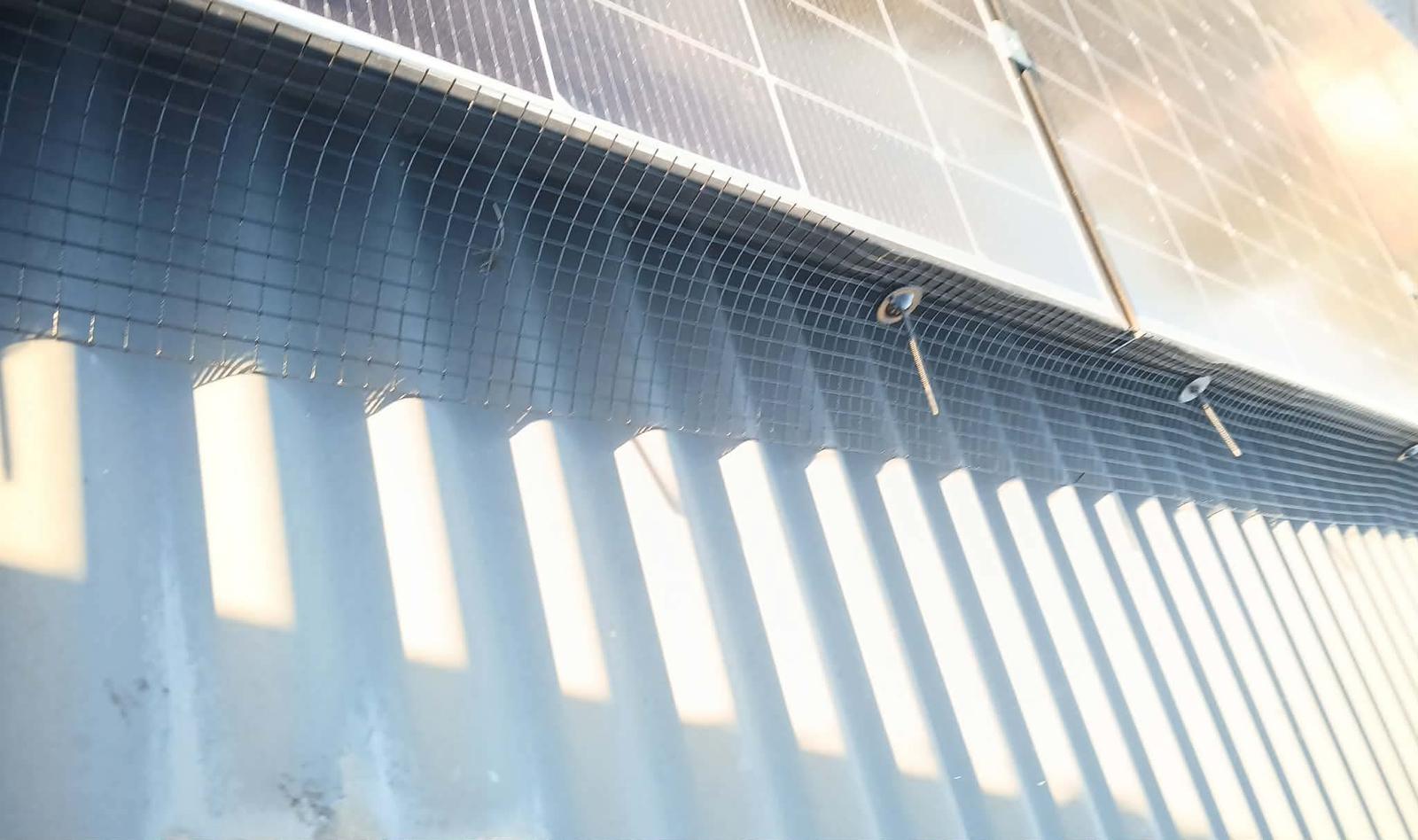
The barrier is galvanised steel wire mesh sealed inside a black PVC jacket. The steel core gives it the stiffness to bridge the gap between panel edge and roof without sagging, and strength no pigeon can push through and no possum can chew. The PVC layer keeps salt air and rain off the wire so rust never starts, and turns it black so it disappears against the panel edge from the street.
The coating is the part that decides how long the job lasts. Bare galvanised mesh on a coastal or southern Adelaide roof starts to bloom with rust at the cut ends within a few years, and rust streaks tile and Colorbond alike. Encapsulated wire does not, which is what allows the manufacturer to put a 25 year product warranty on it. The mesh is specified here by its construction rather than a trade name; the roll used on your job is the one the warranty document covers, and that document comes with the invoice.
- CoreGalvanised steel wire, welded into a regular grid small enough to stop sparrows, not just pigeons.
- CoatingBlack PVC bonded over the wire and the weld points, so no bare steel is exposed anywhere.
- FormSupplied on the roll, cut on the roof to match the outline of the array exactly.
- LifeBuilt to outlast the panels it protects, with a 25 year manufacturer product warranty.
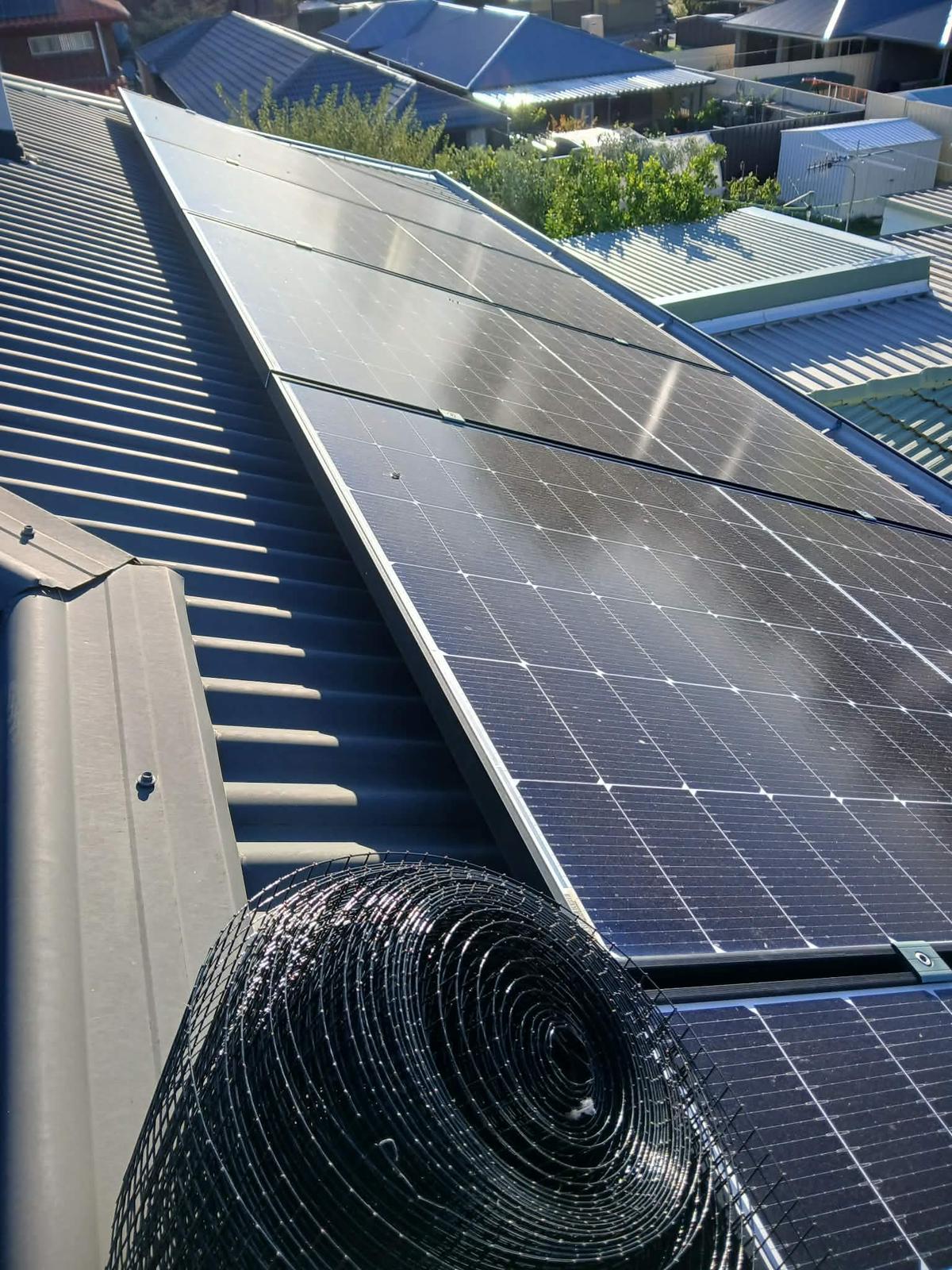 On the roll, install day
Fail-safe nylon clips: why do we not drill?
The mesh is held to the panels by nylon clips that grip the lip of the panel frame, with nylon C-clips for the newer frame profiles that have no lip to grab. Nothing is screwed into the frame, the roof tiles or the roof sheet. Drilling a frame modifies it, which is what panel manufacturers cite to void a warranty; drilling a roof creates a leak path, which is what installers cite to void theirs. The clip method touches neither.
The fail-safe name refers to how they carry load: wind on the mesh is taken by the clip, not passed into the frame, and a clip will let go long before a frame is stressed. Spaced closely along the whole edge they stop any corner lifting, and every one releases by hand, so a panel can be removed for service and the mesh refitted the same way.
- Standard clips grip the frame lip; C-clips suit lipless frames.
- Close spacing along every edge, checked from below before sign-off.
- No adhesive, no silicone, no screws: nothing that fails in heat or leaves a hole.
Why do we not use plastic mesh or bird spikes?
Plastic mesh goes brittle in Adelaide sun within a few summers, and a pigeon that can see the nest through it will push at the weak point until it tears. Bird spikes are for ledges: they stop a bird landing on a parapet, but the gap under a solar panel is a cavity, and spikes along its edge leave the cavity open. Neither closes the space, which is the whole job.
The other common shortcut is a wire mesh without a coating. It closes the gap on day one, then rusts at every cut end, streaks the roof and eventually lets go at the clips. The specification above exists to rule out all three.
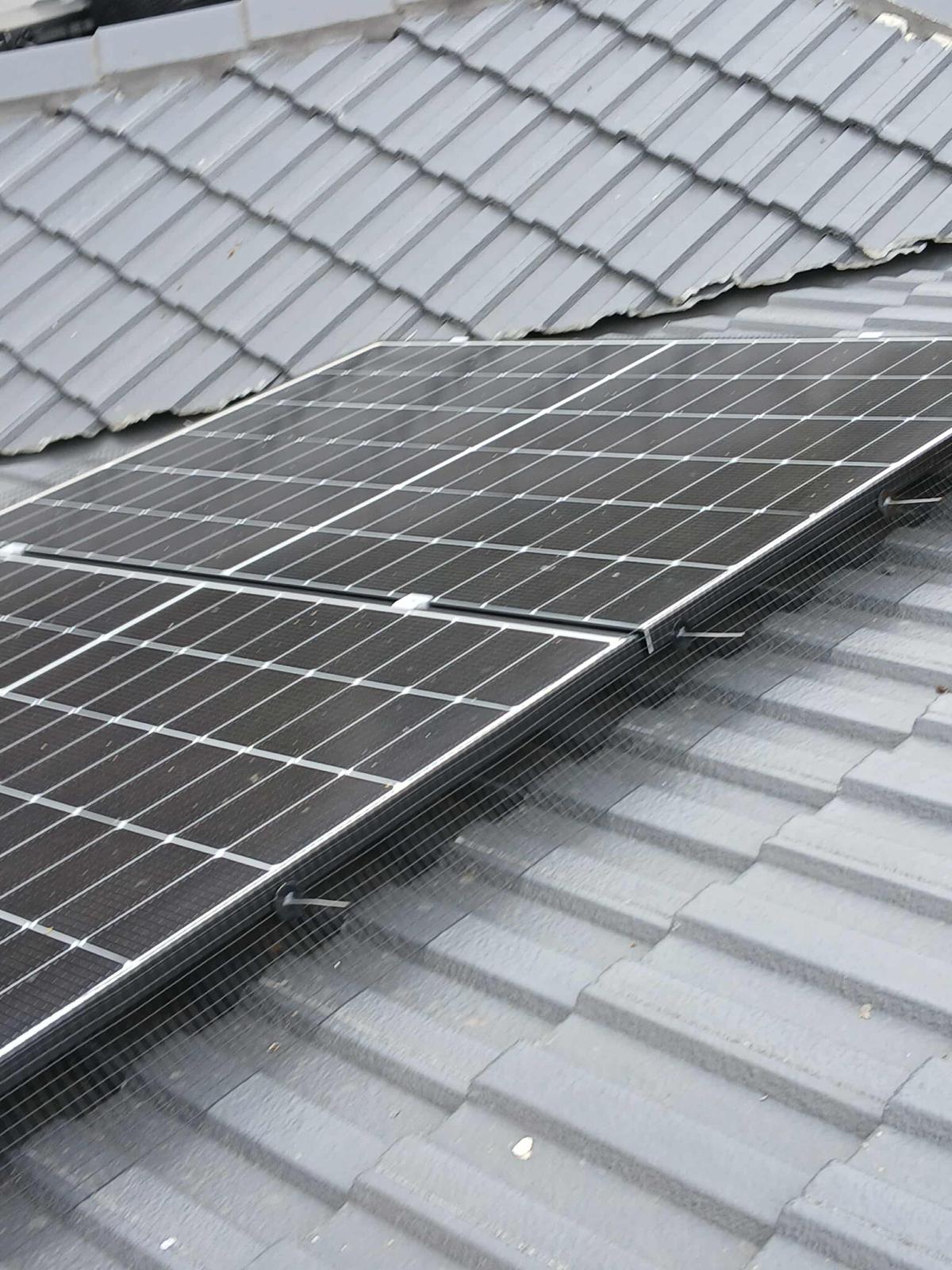 Cut to the tile profile
What happens on install day, hour by hour?
A standard residential array takes two to four hours from arrival to invoice. The sequence is fixed: inspect and quote, clear the nests, cut and clip the mesh, check the fit from below, walk you through it. Heavily nested arrays run longer because clearing is the slow part; several separate strings add cutting time.
- Roof inspection and quotePanels, roof material, nesting activity and access are looked at from the roof, and the itemised quote is agreed before work begins.
- Nesting cleared outEvery nest, feather and dropping pile is removed from under the array and bagged. This is the fire-risk step and it is never skipped.
- Mesh measured and cutMeasured on the roof and cut to the array perimeter, following the tile profile or the Colorbond ribs so the valleys are closed.
- Clipped along every edgeNylon clips or C-clips at close spacing on all sides, corners overlapped so nothing can be lifted.
- Extras, if quotedBird mite spray of the roof space, and panel cleaning scheduled before or after the mesh, never during.
- Check, walkthrough, invoiceFit checked from below for gaps, you see the finished edge, and the certified taxable invoice with the warranty terms is handed over.
How is the existing nest and droppings cleaned out?
By hand, from the roof, before any mesh goes on. Nesting material is pulled out from under each panel, droppings are scraped from the roof surface beneath, and the lot is bagged and taken away. Meshing over old nests locks the fire risk in instead of taking it out, and the mites in that material would still be there, so clearing is a fixed step of every install rather than an extra.
Where a nest holds chicks, the timing is adjusted so the job is completed after they have fledged rather than sealing birds in. The adults are shut out once the mesh is on and move to the next roof, which is why the neighbours often ring a month later.
What are the optional bird mite spray and panel clean?
Two extras can be added to the quote. A bird mite treatment of the roof space, recommended after heavy nesting, because the mites from those nests have no host left and head for the ceiling below. And a solar panel clean, so the glass produces what it should once the droppings are gone.
- Mite sprayA residual treatment of the roof space under and around the old nests, done on the same visit. See bird mite treatment.
- Panel cleanScheduled before the mesh or after it is fitted and dry, never during, because wet glass on a pitched roof is dangerous to stand near. See solar panel cleaning.
How does the 25 year product warranty work?
The mesh carries the manufacturer's 25 year product warranty covering corrosion and breakdown of the PVC coating. It is a warranty on the material, and it is separate from the workmanship: Symes SA covers the installation itself, so a gap found after the job or a section that lifts is put right by Edward at no charge. Both are written on the certified taxable invoice, and the product warranty is documented and transferable to the next owner.
The distinction matters when you compare quotes. An operator who says "25 year warranty" without saying which part is meant may be quoting the roll's warranty and offering nothing on the fit. Ask which is which; the answer should be on paper. How warranties in this trade are written, and what usually gets excluded, is in the warranty guide.
Does this void the solar system warranty?
No, because nothing is modified. Panel manufacturers void warranties for changes to the frame; the clips hold the frame lip and change nothing about it. Installers void workmanship warranties for penetrations of the roof; the roof is never drilled. Both warranties are exactly where they were before the mesh, and if a panel is ever replaced under warranty the clips release, the panel comes out, and the mesh goes back on.
Put the question to any operator you compare, because screwing mesh down is quicker and some still work that way. The comparison of clip fixing against drilled and glued methods is set out on the solar and roof proofing pillar.
 Finished edge, Colorbond
What does solar panel bird proofing cost in Adelaide?
It is quoted after a roof inspection, or from a clear photo of the array and the roof if you want a figure before the visit, and it is one itemised line for the mesh and fit with the extras shown separately. Three things move it: the number of panels, because the mesh runs the full perimeter; the roof material and pitch, because Colorbond ribs and steep tile take longer to fit around; and how much nesting has to be cleared before the mesh goes on.
The quote is given up front, carried onto the certified taxable invoice beside the warranty terms, and settled on completion. Where the picture across all services is useful, it sits on the pest control cost page.
- 1Panel countPerimeter length sets the metres of mesh and the number of clips.
- 2Roof material and pitchCorrugated and steep tile roofs take longer to cut and fit around.
- 3Nesting to clearA season of pigeons is minutes; several years is an hour or more.
- 4ExtrasMite spray and panel clean are separate lines you can take or leave.
Solar panel bird proofing Adelaide: the technical questions
What is the mesh made of?
Galvanised steel wire, welded into a grid, fully jacketed in black PVC. The steel gives it rigidity and strength; the PVC stops corrosion at the cut ends and weld points and makes it near invisible against the panel edge. It comes on a roll and is cut on the roof to the array's shape.
Do you drill into the panels or the roof?
No. Fail-safe nylon clips on the frame lip, or nylon C-clips on frames without a lip, hold the mesh at close spacing along every edge. No screws, no adhesive, nothing through the frame, tiles or sheet. Every clip releases by hand if a panel ever needs to come out.
Will it void my solar warranty?
Not with clip fixing. Frame modification and roof penetration are the two things manufacturers and installers cite, and this method does neither. Your panel warranty and your installer's workmanship warranty stand as they did before, and the mesh comes off and goes back on around any warranty panel replacement.
How long does the install take?
Between two and four hours on a typical home array, following the six steps above. Heavily nested arrays take longer, since clearing is the slow part, and roofs with several separate strings add cutting and fitting time. A time estimate comes with the quote.
What is covered by the 25 year warranty?
The mesh itself, against corrosion and failure of the PVC coating, under the manufacturer's product warranty. The installation is covered separately by Symes SA: a gap or a lifted section after the job is fixed at no charge. Both are on the certified taxable invoice, and the product warranty transfers with the house.
Want the mesh done to this spec? Send a photo of the array for a quote.
PVC-coated steel, nylon clips, nothing drilled, nests out first, 25 year product warranty written on the invoice.