
Humane Possum Removal in Adelaide
Possum removal Adelaide law allows is narrow: the animal is protected, it cannot be harmed, and it must be released within 50 metres of where it was caught. Symes SA holds the licence for this work, fits a one-way door, hatch or cage trap on the day, and closes the entry before leaving so the roof does not fill up again.
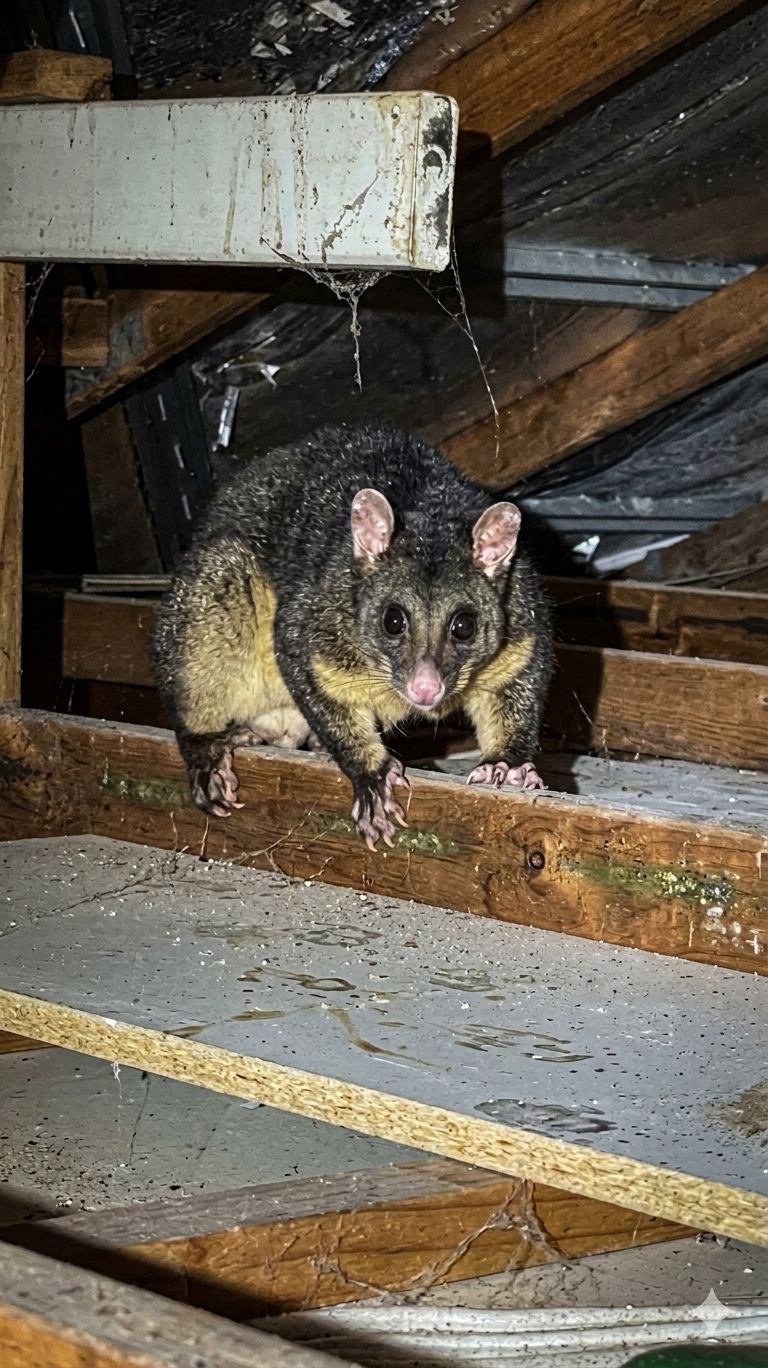 Found on inspection, Adelaide roof
How do you know it is a possum and not a rat?
A possum is heavy and slow: single loud thumps, a landing you can feel through the ceiling, and activity that starts just after dark and stops before dawn. A rat is light and fast: continuous scurrying at any hour, scratching inside walls, and small droppings in the pantry. Droppings settle it if you can find them.
| Clue | Brushtail possum | Ringtail possum | Rat or mouse |
|---|---|---|---|
| Sound | Heavy thumps, slow footsteps, a growl or hiss at night | Lighter movement, chattering, usually outside near foliage | Fast, light scurrying and gnawing, often in the walls |
| Time of night | Leaves at dusk, returns before dawn, quiet by day | Dusk to dawn, rarely in the roof at all | Any time, including daytime |
| Droppings | Cylindrical, 15 to 25 mm, dark, often in one latrine spot | Small, dark, olive-shaped, in clusters | Small spindle shapes, 5 to 15 mm, scattered along runs |
| Smell | Strong musky urine smell that stains ceilings | Faint | Sharp ammonia smell where they nest |
| Damage | Displaced tiles, torn sarking, flattened insulation in one spot | Drey nests in trees, stripped fruit and roses | Chewed cables, gnawed timber, shredded insulation everywhere |
| Where it gets in | Lifted ridge capping, gaps at the gable, open eaves, broken tiles | Seldom enters; a hedge or tree touching the roof if it does | Any gap wider than a thumb, weep holes, pipe penetrations |
Adelaide roofs mostly host common brushtails; ringtails prefer to stay in the trees. If the table points to rodents, the job is a rat and mouse treatment instead, and a roof that has had both is common, because the possum's entry hole becomes the rat's entry hole.
What does South Australian law say about possums?
Possums are protected native animals under the National Parks and Wildlife Act 1972. In South Australia you cannot harm, kill or keep one, and you cannot trap or relocate one without a permit. A trapped possum must be released within 50 metres of the capture point, on the same property, so it can return to its home range.
The 50 metre rule surprises most homeowners, because it means the possum is not going anywhere. Removal in SA is not about relocating the animal; it is about getting it out of the roof and making sure it cannot get back in. That is why the entry point work described further down is the real job, and the trap or door is only the first step.
Symes SA holds the licence the state requires for this work, and every removal follows the Department for Environment and Water guidance on living with possums. If you want the full picture before you book, including what you can legally do yourself, our guide to possum laws in South Australia sets it out in plain language.
- Protected speciesBrushtail and ringtail possums are native wildlife. Harming one is an offence with fines attached.
- Permit to trapTrapping requires a permit. A homeowner cannot legally set a cage and drive the possum to a park.
- 50 metre releaseA trapped possum is released within 50 metres of where it was caught, on the same property, so it keeps its territory.
- Released the same nightPossums are nocturnal and stressed by daylight. A caught animal is released at dusk, not held for days.
- Exclusion is the answerBecause the possum stays in the area, the only lasting fix is closing the roof so it nests in a tree instead.
What is our removal method, step by step?
Edward inspects the roof from outside and inside, finds the entry point and any secondary gaps, confirms it is a possum from the evidence, then fits a one-way door or hatch at the entry or sets a cage trap. The primary entry is secured on the same visit, and the animal exits or is released that night.
Inspection, outside and in
Ridge capping, gable ends, eaves, valleys and vents are checked from the ground and the roof. Inside the roof space, droppings, flattened insulation and the latrine spot show where the possum sleeps and which way it comes in.
Quote before anything is fitted
The entry point, the method and any repair needed are explained and priced before work starts. If the roof has several openings, you are told which is the main one and which will be closed.
Door, hatch or cage fitted
The method is chosen on the day from how the possum is using the roof. A one-way door goes on the active entry; a cage is set inside the roof or at the entry where a door will not work.
Entry secured the same day
With a cage, the entry and exit are closed on the spot. With a one-way door, the gap is sealed once the possum has exited, which is usually the first night.
Release or exit at dusk
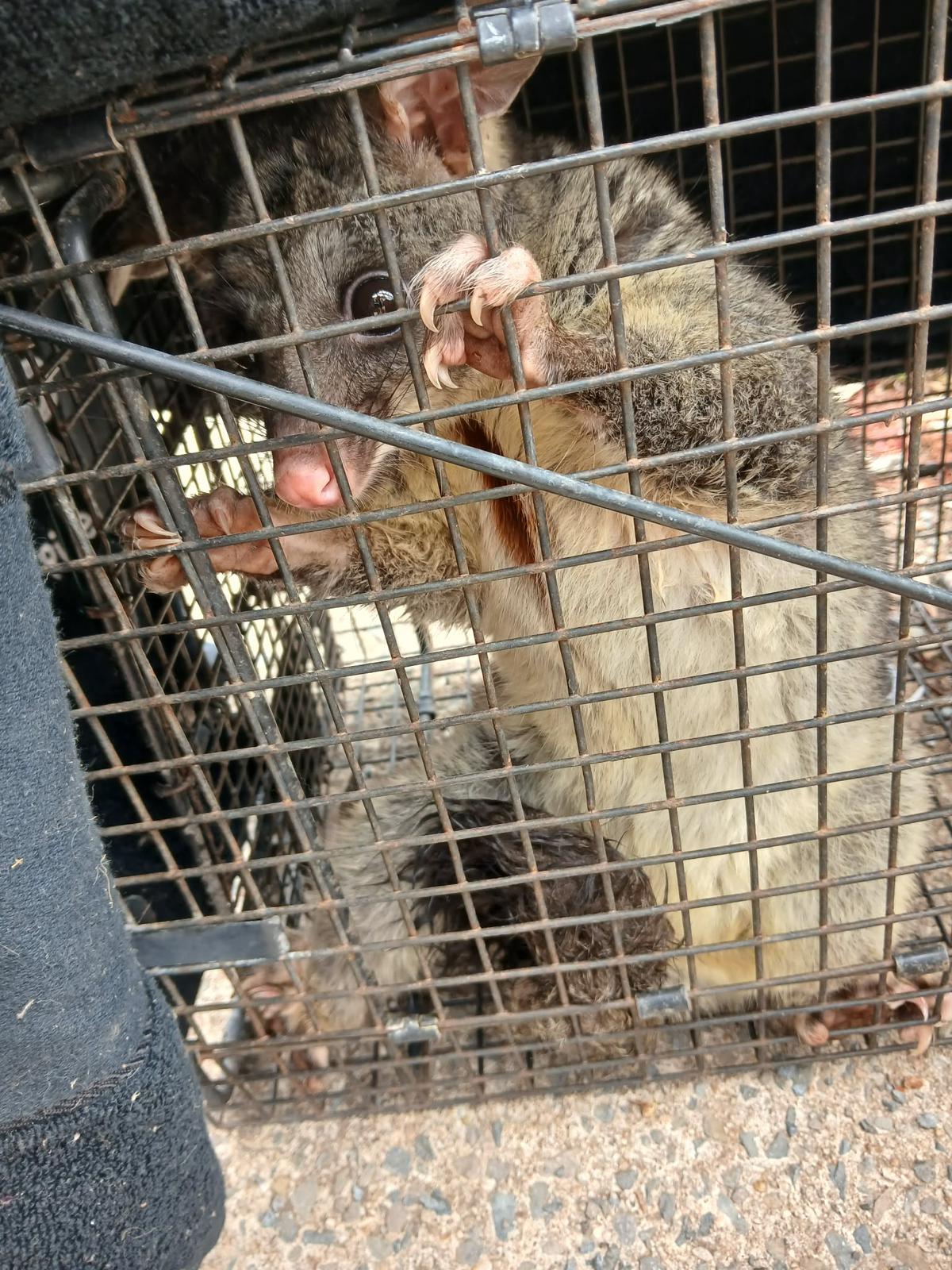
A trapped possum is released on the property within 50 metres at dusk. A possum leaving through a one-way door simply walks out to feed and finds it cannot get back in.
Repairs and certified invoice
The main entry point is repaired so it holds, the roof is checked for the next weak spot, and you receive a certified taxable invoice with the warranty terms written on it.
One-way doors, hatches and cage traps: which one, and when?
A one-way door is the first choice when the entry point is a single gap the possum uses every night, because the animal removes itself with no handling. A hatch does the same on a larger opening. A cage trap is for roofs where the entry cannot be isolated, or where the possum is already inside and needs to come out now.
- Most common
One-way door
A spring-loaded flap fixed over the active entry. The possum pushes out at dusk to feed and the flap closes behind it. No trap, no handling, and the animal stays in its own territory.
- Best for
- A single clear entry at the eave, gable or ridge
- Handling
- None, the possum walks out
- Sealed
- After the first night's exit
- Larger openings
Hatch
A hinged panel that works like the door but covers a wider gap, such as a missing tile or an open gable vent. Used where the opening is too big for a standard flap and too useful to close until the possum is out.
- Best for
- Broken tiles, open vents, wide eave gaps
- Handling
- None
- Sealed
- Once exit is confirmed, then repaired
- When the roof cannot be isolated
Cage trap
A baited wire cage set in the roof space or at the entry. Used when there are several openings, when the possum is trapped inside, or when you need it out tonight. Checked and released the same evening.
- Best for
- Multiple entries, possum already inside, urgent jobs
- Handling
- Released within 50 m at dusk
- Sealed
- Entry and exit closed on the day
How do we find and seal the entry point the same day?
The entry point is found by reading the roof: rub marks and fur on the timber, a worn path through the insulation, droppings concentrated below one gap, and daylight showing through from inside. Once found, the main entry is closed with a repair that suits the roof material, on the same visit, so the possum cannot simply come back tomorrow.
Sealing on the same day matters because a possum evicted at dusk will try its old door first. If the gap is still open when it returns before dawn, the job has failed. Symes SA closes the primary entry identified during the inspection, and repairs focus on that point rather than on re-roofing the house. Where the inspection shows a second opening the possum is likely to switch to, you are told about it and it is quoted as part of the roof proofing described below.
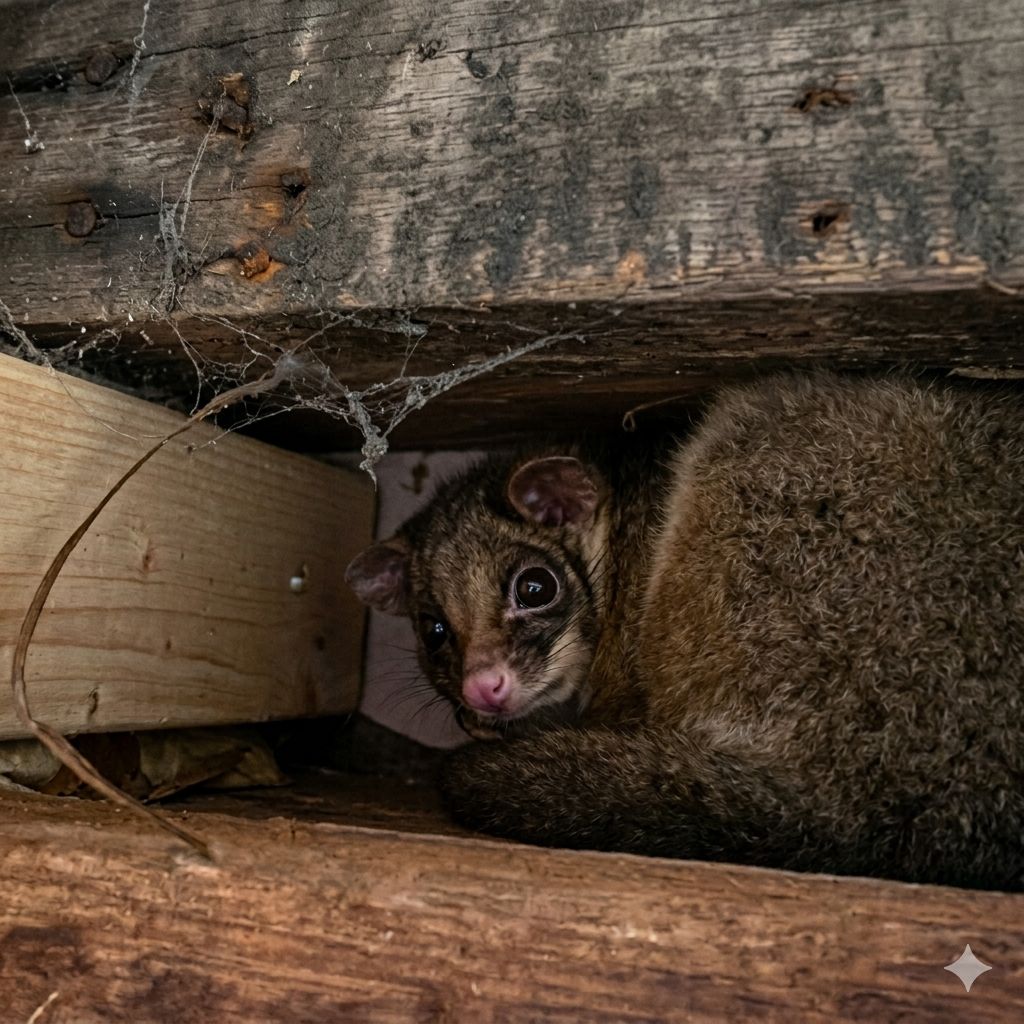
- Lifted or cracked ridge capping where the mortar has failed
- Gaps at the gable end where the tiles meet the barge board
- Open eaves on older homes with no eave lining
- Broken or slipped tiles, especially behind chimneys and valleys
- Unscreened roof vents and whirlybirds
- The corner where a lean-to or verandah roof meets the main roof
What does possum removal cost in Adelaide?
Possum removal is quoted after the roof inspection, because the price depends on how the possum is getting in and what it takes to close that gap. A single accessible entry with a one-way door is the simplest job; multiple openings, cage trapping across several nights or roof repairs add to it. Payment is on completion.
- 1Number of entry pointsOne clear gap is a straightforward door job. Three or four openings mean a cage and more sealing.
- 2Roof access and pitchTwo-storey homes, steep pitches and tile roofs with no walkway take longer and need more care.
- 3Repair needed at the entryRe-bedding ridge capping or replacing tiles is quoted separately from the removal itself.
- 4Follow-up nightsCage trapping sometimes takes more than one night. The quote says how many are included.
The quote is given before anything is fitted and confirmed on the certified taxable invoice, with any variation found on the day priced separately. A fuller breakdown sits on the possum removal cost page, and if you have been told possum removal is free in Adelaide, the page on free possum removal explains what councils and wildlife groups will and will not do.
Camera monitoring, if you want it
If a cage is used, Edward can place a camera on it so you can see when the possum is caught and confirm the roof is empty. It is your choice, offered as part of the service rather than an add-on, and it gives a clear record of what happened and when.
Most people ask for it on two kinds of job: where a family wants to know the possum was treated well, and where a landlord wants proof for the tenant that the animal is gone. Ask when you book or on the day.
Dead possum in the roof or wall?
A possum that has died in a cavity is a different job with its own page. The smell peaks over about a week and needs the carcass located and removed, then the space treated. See dead possum removal for how that is handled.
Released on site at duskWhat happens to the possum after removal?
The possum stays on your property. It is released within 50 metres of the capture point at dusk the same day, as SA wildlife law requires, and it goes back to living in the trees it already knows. Nothing is taken away, driven to a reserve or destroyed, and the possum is never handled more than the release requires.
People often ask why the possum cannot be taken somewhere else. Brushtails are territorial. A possum dropped into another animal's range will fight, lose and usually die within weeks, while a new possum moves into the space it left behind your house. The law reflects that, and so does the method: the animal keeps its range, and your roof stops being part of it.
If the possum has a joey in the pouch, it comes along at release. If there is a back-young left in the roof, which happens with older joeys in spring, Edward retrieves it before sealing so mother and young are reunited that night. Under-house and garden possums, which are a different problem from roof possums, are covered on the under deck and backyard possum removal page.
How do we stop them coming back? Roof proofing.
Roof proofing is the work that turns a removal into a permanent fix: every gap a possum could use is closed with a material that suits the roof, from re-bedded ridge capping and replaced tiles to mesh over vents and flashing at gable ends. The removal closes the entry the possum was using; proofing closes the ones it would use next.
Whether you need it depends on the roof. A well-kept tile roof with one failed ridge cap needs that cap fixed and nothing more. An older home with open eaves, a hedge touching the gutter and three unscreened vents will get a new possum within the season unless the rest is closed. Edward tells you which case you are in during the inspection, and the proofing is quoted as its own line so you can decide.
The same sealing work is what keeps rats out, which is why a rodent treatment often follows a possum job on the same roof. Specifics, materials and what a proofing quote includes are on the roof possum proofing page.
The gap it will try nextWhich Adelaide suburbs do we cover for possum work?
Symes SA does possum removal across all of metropolitan Adelaide from a base in the southern suburbs. The suburbs below have their own pages because their housing and roof types change how the job is done, from bluestone villas with complex rooflines to 1990s estates backing onto reserve. Everywhere else is covered on the service areas page.
Possum removal Adelaide: what people ask before booking
Is it legal to trap and relocate a possum in SA?
Trapping is legal only with the permit the state issues for it, and relocation in the usual sense is not legal at all. A trapped possum must be released within 50 metres of where it was caught, on the same property. A licensed operator like Symes SA can trap and release; a homeowner who sets a cage and drives the animal away is committing an offence.
How far can a possum be relocated?
Fifty metres, and no further. That distance keeps the possum inside its own home range, where it knows the trees, the food and the other possums. Moving it further is illegal in South Australia and is usually fatal for the animal, because a possum dropped into unfamiliar territory is driven out by the residents and cannot find shelter.
How long does removal take?
The inspection and set-up take one to two hours. With a cage the entry is secured on that visit and the possum is usually caught and released the same night. With a one-way door the possum leaves the first night it goes out to feed, and the gap is sealed once its exit is confirmed. Most jobs are complete, including sealing, within 24 to 48 hours of the first visit.
What if the possum has babies?
A joey in the pouch travels with its mother and is released with her. Older back-young, which ride outside the pouch from late winter into spring, can be left in the roof while the mother feeds. Edward checks the roof space before sealing and retrieves any young left behind so they are reunited at the release point that evening, rather than sealed in.
Do you seal the entry point on the same visit?
Yes. Where a cage trap is used, the entry and exit point is secured on the day. Where a one-way door is fitted, the door itself blocks re-entry immediately and the permanent seal goes on once the possum has gone out, normally the next day. The main entry identified during the inspection is the one repaired; further gaps are quoted as roof proofing.
What if it comes back?
A possum can only come back through an open gap, which is why the sealing is part of the job and why the warranty terms are written on your certified taxable invoice. If you hear activity again inside the warranty period, Edward returns to assess whether the original entry has failed or a new one has opened, and resolves it under the terms on the invoice.
Something heavy in the ceiling tonight? Book the inspection.
Licensed, humane and SA wildlife compliant. Entry point found and secured on the same visit, possum released within 50 metres at dusk, certified taxable invoice on completion.