
Roof Possum Proofing in Adelaide
Possum proofing roof Adelaide homes need is the work that comes after the animal is out: every gap it could use, at the ridge, the gable, the eave, the valley and the vents, closed with a repair that suits that part of the roof. Symes SA does it as a separate, quoted line so you can see what is being closed and why, and the same sealing is what keeps rats and birds out.
- Ridge and hipsCapping re-bedded, cracked caps replaced
- TilesBroken and slipped tiles replaced
- Gable endsFlashed where tiles meet the barge
- Eaves and valleysGaps meshed or lined
- Vents and whirlybirdsScreened with steel mesh
Why does removal without proofing not work?
Because the possum stays in the neighbourhood. South Australian law releases it on your own property, so the animal you evicted tonight sleeps in a tree fifty metres away and tries your roof again tomorrow. If the door it used is closed, it tries the next weak spot. If that one is open, it is back inside by the end of the week, and the removal has bought you a few nights.
This is the reason Symes SA treats the removal and the proofing as two pieces. The removal shuts the entry the possum was using on the day. Proofing walks the rest of the roof and closes the openings it would move to, which on an older Adelaide home can be four or five.
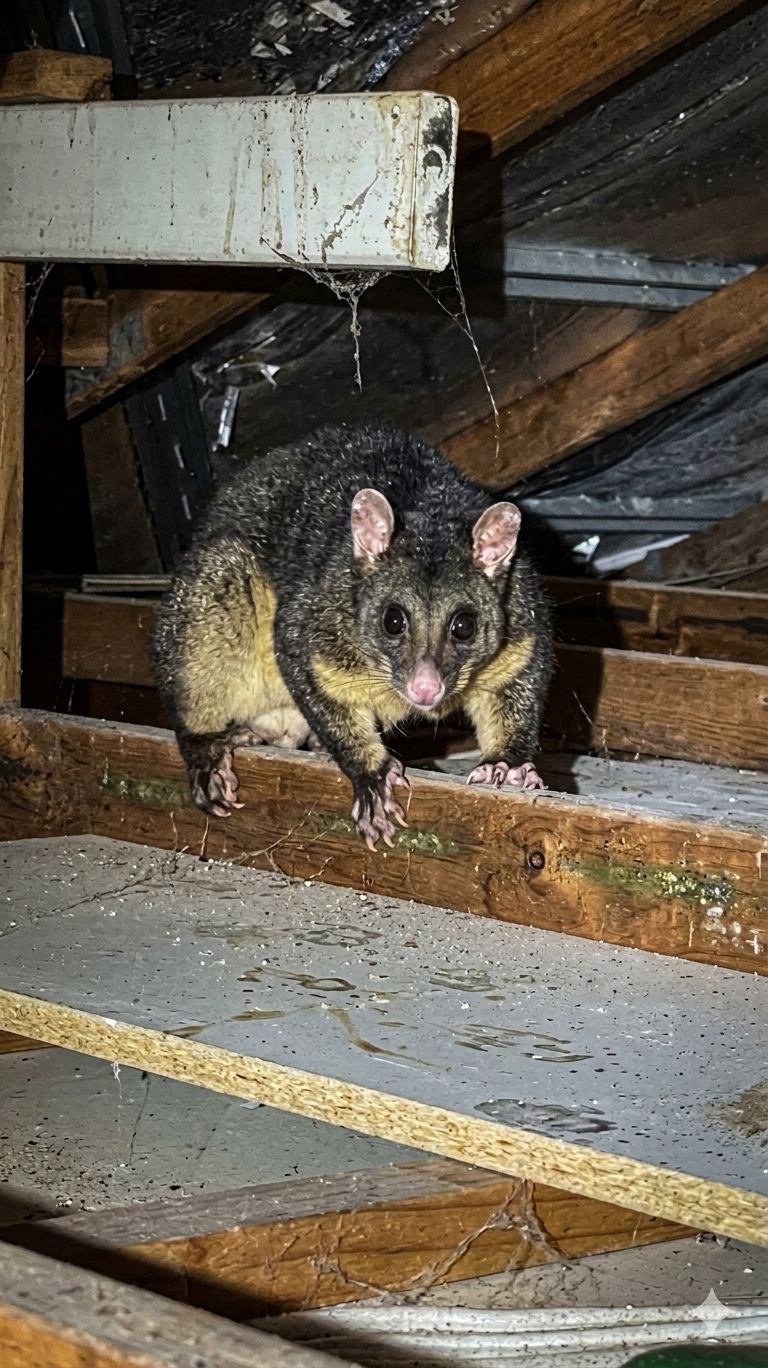 Inside the roof, before sealing
Where do possums actually get into an Adelaide roof?
At the places where two parts of the roof meet and the builder relied on mortar, a lining or a tight fit that has since moved. Edward checks the roof from the ground, from the roof and from inside, because a gap that is invisible from below shows as daylight from the ceiling side.
Broken tiles and lifted ridge capping
The most common entry on a tiled roof. Ridge and hip capping is bedded in mortar that cracks and falls out over decades, and once a cap lifts a possum can get under it and along the ridge line. A single cracked or slipped tile behind a chimney or in a valley does the same thing further down the roof. Both are repaired rather than blocked: the capping is re-bedded and re-pointed, and the tile is replaced with a matching one.
Eaves, gable ends and valley gaps
Older homes with open eaves have no lining between the wall top and the roof, and a possum walks in along the top plate. At a gable end the tiles stop at the barge board and leave a triangular gap at every course. Where a lean-to or verandah roof runs into the main roof, the junction is often just a flashing that has lifted. These are closed with steel mesh cut to the profile, or with new flashing, so the fix does not block ventilation.
- Ridge cappingMortar failed, cap lifted. Re-bed and point.
- Slipped or broken tileBehind chimneys and in valleys. Replace the tile.
- Open eaveNo lining at the wall top. Mesh along the top plate.
- Gable endGaps between tiles and barge. Flash or mesh each course.
- Lean-to junctionVerandah roof meets main roof. New flashing.
- Vents and whirlybirdsUnscreened. Steel mesh over the opening.
Overhanging branches
A branch touching the gutter, a hedge against the wall, a trellis or a pergola beam is the ladder. Proofing is not finished until the ladder is dealt with, so the inspection notes which branches need cutting back to leave a clear gap from the roof, and you are told before the sealing goes on.
What materials do we use to seal a roof?
Ones a possum cannot chew through and that belong on a roof: galvanised steel mesh, metal flashing, matching roof tiles and roofing mortar. Nothing is stuffed with foam, plastic or timber offcuts, because a brushtail's teeth go through those in a night and the repair has to survive weather for years.
- Galvanised steel meshFor eaves, gable courses, vents and whirlybirds. Cut to the profile of the tile or sheet and fixed so air still moves through the roof.
- FlashingWhere a lean-to, verandah or extension roof meets the main roof, and at barge boards where mesh would look untidy from the street.
- Tiles and mortarBroken tiles replaced with a match, ridge and hip capping re-bedded and pointed. A repair, not a patch, so the roof sheds water as it should.
- FixingsScrews and clips suited to the roof material, so nothing rusts out or works loose in wind.
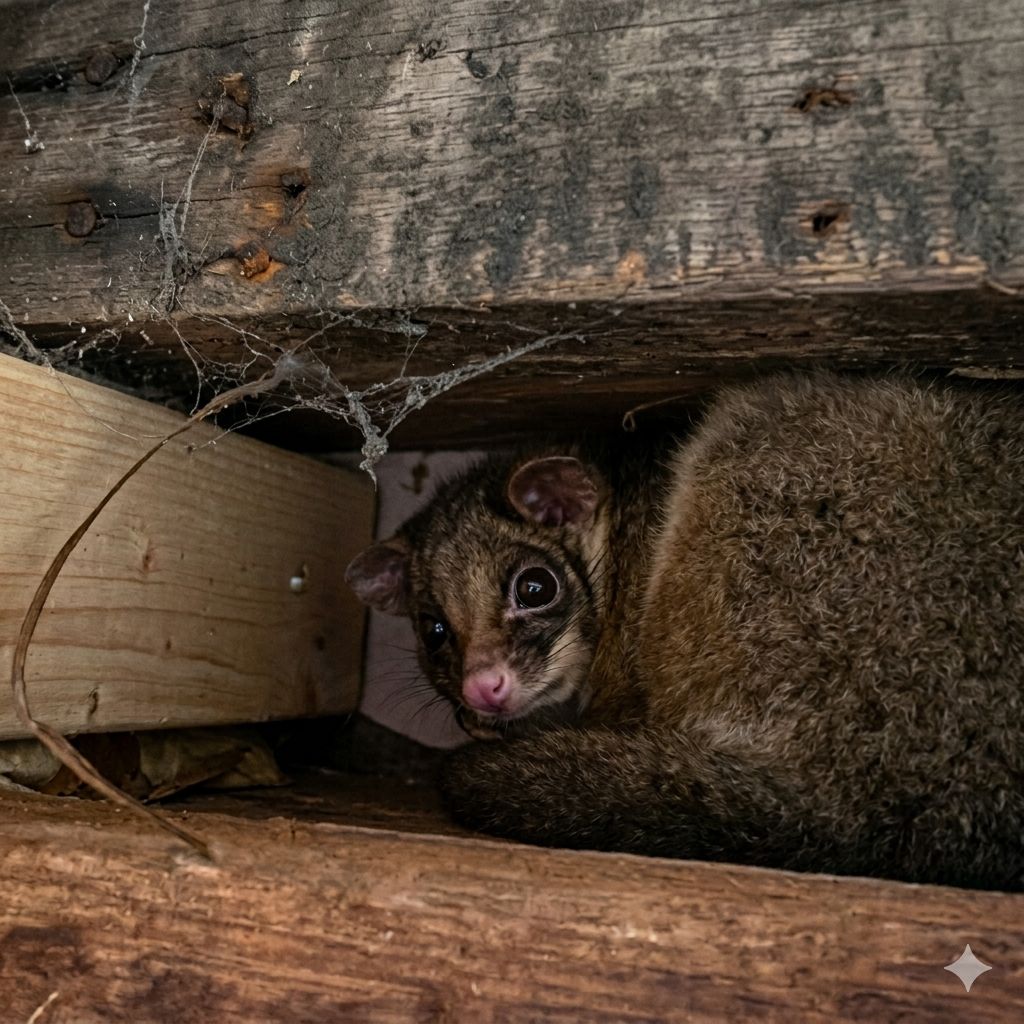 Bedded beside the entry gap
How does this overlap with rodent and bird proofing?
A gap that lets a possum in has been letting rats in for longer, and it will let pigeons and starlings in after the possum is gone. Sealing the roof for one animal seals it for the others, which is why rodent work so often comes after a possum job at the same address and why the two are quoted together where the inspection finds both.
The difference is scale. Rats need a gap the width of a thumb, so rodent proofing goes further into weep holes, pipe penetrations and the corners of the eave lining than possum proofing does; that is described under rat and mouse control. Birds under a solar array are a different job again, with mesh clipped to the panel frames rather than fixed to the roof, on the solar and roof bird proofing page. Where all three are present, one visit and one invoice covers them.
What is the warranty on proofing work?
Proofing is warranted work. The terms go on your certified taxable invoice, not into a conversation on the day. If a possum gets back in through a point that was sealed, Edward returns, finds how, and resolves it under those terms. A new opening that was not part of the job, such as a tile broken by a storm or a branch that has grown back onto the roof, is quoted as new work, and the invoice says so.
- In writingPeriod and conditions on the invoice, with the areas sealed listed.
- Sealed points coveredIf a closed gap fails, it is fixed under the warranty.
- New gaps quotedStorm damage and regrowth are not the original job and are priced separately.
The live animal has to be out before any of this starts; see possum removal for how that is done, and book a roof inspection to get the proofing quoted.
Possum proofing roof Adelaide owners ask about
Why do I need proofing if the possum is gone?
Because it is not gone far. A possum released on your property, as SA law requires, is living in a tree nearby and will test your roof again. If the entry it used is closed but the next weak spot is open, it is back inside within days. Proofing closes the openings it would move to, and on a roof with only one gap, the inspection will tell you that and the proofing line will be small or nothing.
How do you find every entry point?
Three ways at once. From the ground, looking for lifted capping, slipped tiles and branches touching the roof. From the roof, checking each ridge, hip, valley, gable and vent by hand. From inside the ceiling, where a real gap shows as daylight and the possum's own path through the insulation leads to it. Rub marks, fur on timber and droppings under one spot confirm which gaps are in use.
Does this also stop rats and birds?
Largely, yes. The same mesh, flashing and tile repairs that keep a possum out keep pigeons and starlings out of the roof. Rats need the job taken further, because they fit through a gap the width of a thumb, so rodent proofing adds weep holes, pipe penetrations and eave corners. If the inspection finds rodent sign as well, both are quoted together.
Is the proofing warranted?
Yes. The warranty period and its conditions are written on the certified taxable invoice, along with the list of points that were sealed. If any of those points fails and a possum gets back in through it, Edward returns and fixes it under those terms. A new opening from storm damage or regrowth is separate work and is quoted as such.
Close the roof once, properly, and stop paying for removals.
Every entry point found from the ground, the roof and the ceiling, sealed with steel mesh, flashing and matching tiles. Warranty in writing on the invoice.