
Rat & Mouse Control in Adelaide
Rodent control Adelaide homes need is not a box of bait in the roof. Symes SA finds where the rats or mice are getting in, sets lockable tamper-resistant stations and traps where they travel, and closes the entry points so the job ends rather than repeats. Roof space, subfloor and wall cavities are all inspected, because that is where the evidence is.
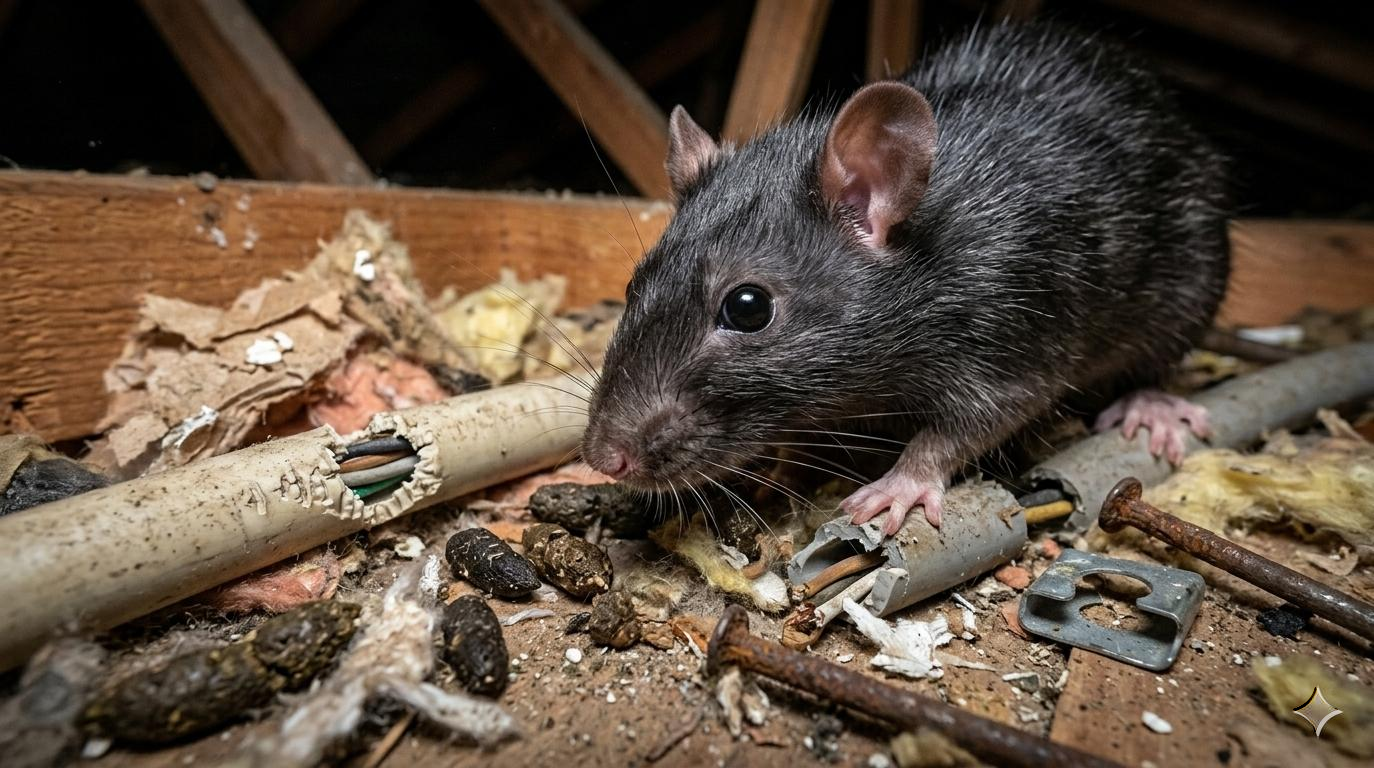 Roof rat, Adelaide roof space
Rat or mouse? How do you tell from the evidence?
Droppings settle it fastest. Mouse droppings are rice-grain size, 3 to 6 mm, pointed at both ends and scattered everywhere. Rat droppings are 12 to 18 mm, blunt or spindle shaped, and clustered along the runs they use. Rats gnaw hard materials and leave grease marks on the walls they follow; mice nibble and leave a musty smell in cupboards.
| Clue | House mouse | Roof rat (black rat) | Norway rat (brown rat) |
|---|---|---|---|
| Droppings | 3 to 6 mm, pointed ends, scattered widely | 12 mm, spindle shaped, along runs and in the roof | 18 mm, blunt ends, near burrows and bins |
| Where you hear it | Kitchen, pantry, behind appliances, wall voids | Roof space and ceiling at night, along beams and cables | Subfloor, under decks, compost, drains |
| Damage | Nibbled packets, shredded paper nests in drawers | Chewed cables and pipes, insulation torn for nesting, stripped fruit | Burrows along footings, gnawed timber and skirting |
| Marks | Tiny footprints in dust, faint rub marks | Dark grease smears on beams, rafters and along the top of walls | Grease marks low on walls and around burrow entrances |
| Gap it needs | About 6 mm, the width of a pencil | About 12 mm, the width of a thumb | About 20 mm |
| How it moves | Ground and low cupboards, rarely climbs far | Excellent climber: trees, fences, cables, up into the roof | Ground level, burrows, swims drains |
The roof rat is the animal in most Adelaide ceilings. If the noise is heavy thumping rather than scurrying, it is a possum, and the job becomes humane possum removal instead.
Where do rodents get into Adelaide homes?
Anywhere a gap is wider than a pencil for mice or a thumb for rats. The usual routes are the eaves and gable ends where the roof meets the wall, gaps around pipes and cables where they enter the house, weep holes in the brickwork, the space under a roller door, a lifted tile or ridge cap, and any tree or fence line that touches the roof.
Roof rats climb. A branch resting on the gutter, a climbing plant on the wall or a fence that meets the eave line is a ladder, and once on the roof they only need a gap at the gable, a missing tile or an unscreened vent. Mice come in lower: under doors with worn seals, through the gap around the hot water service pipes, through weep holes that have lost their mesh, and in with cardboard boxes and firewood.
Every entry point found during the inspection is listed on the quote with what it takes to close it. The list is the job, because baiting a house with an open gable is a subscription, not a solution.
- Eaves and gablesWhere tiles meet the barge board and where the eave lining has gaps. The main rat entry on Adelaide roofs.
- Pipe and cable entriesHot water service, air conditioning lines, gas and NBN entries with a gap around the penetration.
- Weep holesBrick weep holes with no mesh let mice straight into the wall cavity.
- Doors and roller doorsWorn door seals and the gap under a garage roller door are ground-level highways.
- Roof tiles and ventsA slipped tile, cracked ridge mortar or an unscreened whirlybird opens the roof void.
- Trees and fencesAnything touching the roofline is a ladder for a roof rat.
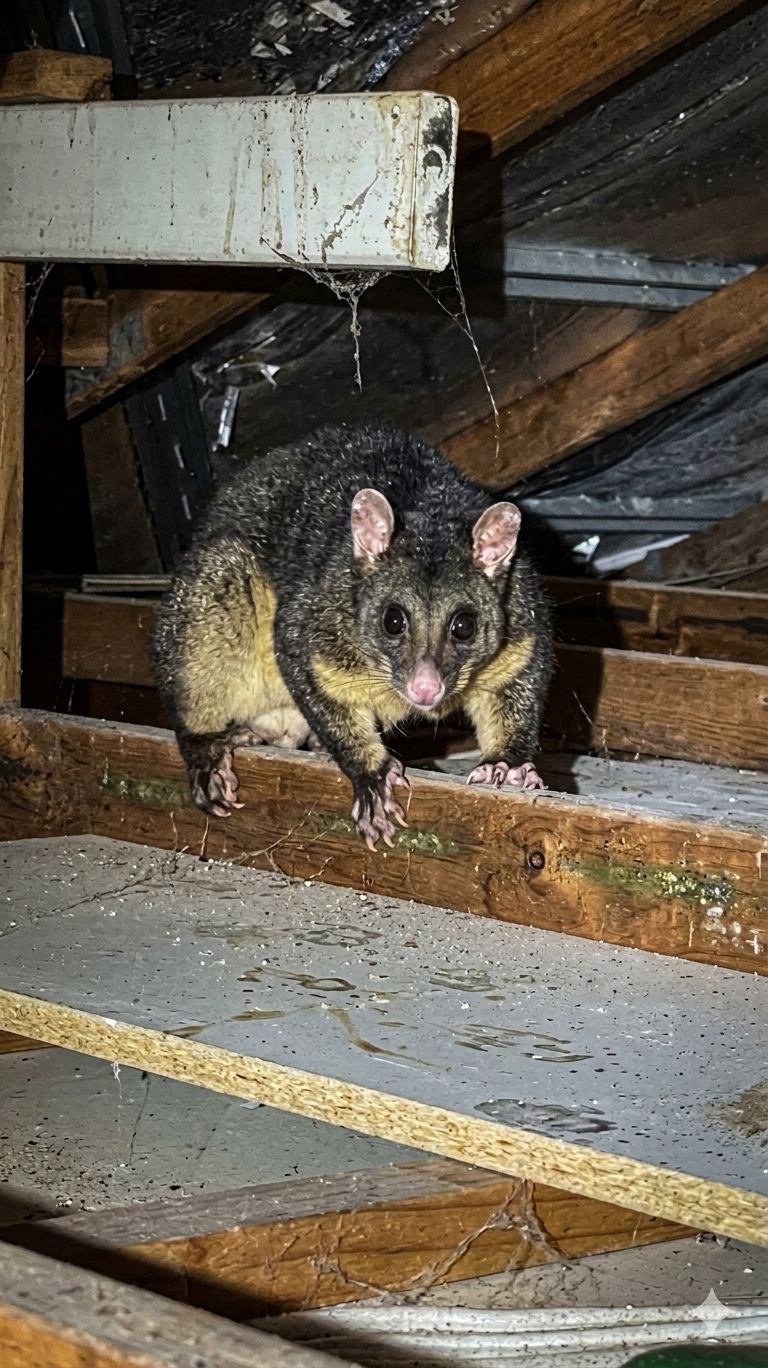 Roof void, inspected by torch
Roof spaces, subfloors and wall cavities: how are they inspected?
The roof void is entered through the manhole and walked along the joists with a torch, looking for droppings, grease marks on the timbers, chewed cables and flattened insulation where the nest is. The subfloor is crawled where clearance allows, checking for burrows, runs along the footings and gnawed bearers. Wall cavities are read from the outside: rub marks at weep holes and pipe entries, and noise traced by tapping.
The inspection tells Edward three things: which animal it is, where it travels, and where it came in. Stations and traps go on the runs, not in random corners, because rodents follow the same paths every night along walls and beams. In a roof void that means beside the top plate and along the main beams; in a subfloor it means the footings and the pipe runs; in a kitchen it means behind the fridge and under the kick board.
Rodent evidence in the roof is often mixed with possum evidence, because the possum made the gap first. Where that is the case the visit becomes two jobs on one roof, and the sealing described under roof possum proofing serves both.
What is our approach: bait, trap and seal?
Bait reduces the population, traps remove individuals fast and confirm what is there, and sealing stops the next ones. All three happen on the first visit. Lockable stations with anticoagulant block bait go on the runs in the roof, subfloor and around the perimeter; snap traps go where a carcass must be recovered; and the entry points found at inspection are closed before Edward leaves.
Bait on the runs
Anticoagulant block bait secured inside lockable, tamper-resistant stations, placed where the droppings and grease marks show the animals travel. Blocks are wired into the station so they cannot be carried off and dropped elsewhere.
The station count and placement are recorded on the invoice so they can be checked and removed later.
Traps where recovery matters
Snap traps, inside stations, in the roof space and cavities where a poisoned rodent might die somewhere it cannot be reached. A trap gives a body you can remove, which is the point in a wall or a ceiling.
Traps also confirm the species quickly, which matters when the evidence is mixed.
Seal the way in
Gaps found at inspection are closed with steel mesh, sheet metal, mortar or expanding foam backed with mesh, depending on the material. Weep holes are meshed, pipe entries packed, and gable gaps flashed.
Roof repairs beyond the entry point are quoted separately so you can see what is essential and what is extra.
Why does sealing matter more than baiting?
Because bait only deals with the rodents that are already inside. Every roof rat in an Adelaide suburb is looking for a warm, dry void, and if the gable gap that let this one in stays open, the next one arrives within weeks. Sealing turns a treatment into a fix; baiting without sealing is the reason some homes are on a permanent rodent contract.
Sealing is also what makes the warranty meaningful. A quote that closes the entry points is a quote that can promise something. Edward lists every gap found, which ones are closed on the day, and which need a roofer or a builder, so that if activity returns the cause can be found rather than argued about.
The one exception is a property with constant reinvasion pressure, such as a home backing onto a creek, a warehouse with roller doors open all day or a food premises. There, sealing reduces the traffic and a monitored station program handles what still gets through, which is the model used for commercial pest control sites.
Tamper-resistant stations: are they safe around pets?
Yes, when the right station and the right bait are used. Symes SA uses lockable stations that a dog cannot open and a child cannot reach into, with the bait block wired inside so it cannot be carried out. Stations are placed where pets do not go, and the roof and subfloor are the main placements in a home with animals.
- Lockable, keyed stations; the bait is secured inside, not loose
- Placed in the roof void, subfloor and behind fixed items, away from pet areas
- Bait class chosen with the household in mind, and the active named on the invoice
- Station locations recorded so they can be collected once the job is done
- If a pet ever reaches bait, the invoice tells the vet exactly what it was
What about a dead rodent in a wall?
A rodent that dies in a cavity produces a strong smell for one to two weeks, peaking around day three to five in warm weather. If the carcass can be located by smell and by tapping, a small opening is made, the body removed and the opening repaired. If it cannot be reached, the smell is managed with an odour neutraliser and the cavity is treated for the flies and mites that follow.
Locate by smell and sound
The smell is strongest closest to the carcass. Tapping the wall and checking the roof void above narrows it to a cavity bay.
Remove where reachable
A cut in the plaster or access from the roof void lets the body be taken out and the space cleaned. The hole is patched.
Treat the cavity
Blowflies and mites leave a carcass within days. The void is dusted so they do not move into the room.
Neutralise if unreachable
Where the body cannot be reached, an odour neutraliser in the cavity shortens the smell until it dries out.
Snap traps in the roof exist to avoid this. Where a rodent is likely to die in a void, trapping is used ahead of bait so the animal is recovered rather than lost in the wall.
Rodents and roof damage: how do they overlap with possums?
A possum that has lived in a roof leaves a hole a rat will use next, and the two are found together on Adelaide roofs more often than apart. The possum lifts the tile or pushes through the gable; the rats follow the same route once the possum has moved on, and the droppings of both end up in the same insulation.
The treatment for each is different, because possums are protected and rats are not, but the sealing is the same work. A roof that has had both gets the possum handled first under the licence that work requires, then the rodent stations go in, then the entry points are closed so neither returns. Doing the rodent work first and leaving the possum entry open simply feeds the next possum into a baited roof.
If you have heard heavy movement as well as scurrying, or found large droppings alongside small ones, say so when you book so both jobs can be quoted for the one visit. The possum side of the work is described under humane possum removal in Adelaide.
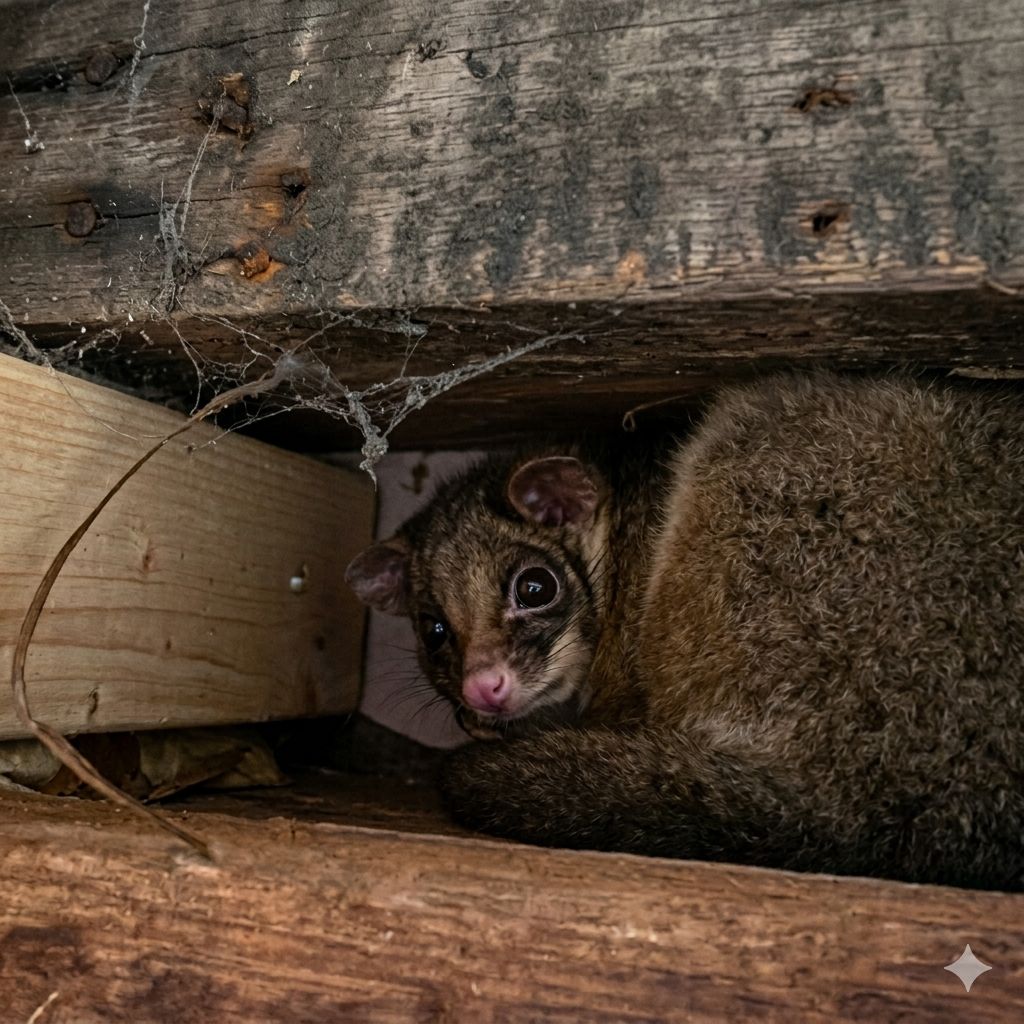 Possum gap, rat entry
What do commercial rodent programs involve?
A commercial program is a station network around and inside the premises, checked on a schedule, with a site map and a log of every station and what was found. Food businesses, warehouses, schools and childcare centres run programs because their audits require documented rodent monitoring rather than a one-off treatment.
The first visit is a full inspection and clean-out: sealing what can be sealed, setting the stations and mapping them. Follow-up visits check bait take, record activity, move stations as the pattern changes and keep the file current for the environmental health officer. Where the site cannot be sealed, such as an open-door warehouse or a loading dock, the program is what keeps the population at zero. Terms and visit frequency are set out under commercial pest control in Adelaide.
What does rodent control cost in Adelaide?
A rodent job is quoted after the inspection, because the price depends on how many stations the runs need, whether traps are required for recovery, how many entry points have to be sealed and with what, and whether a follow-up visit is included. Sealing that needs a roofer or a builder is quoted separately.
- 1Extent of activityOne mouse in the pantry and a roof full of rats are different station counts.
- 2Spaces involvedRoof only, or roof, subfloor and cavities together.
- 3Entry points to closeNumber, size and material: mesh over a weep hole is quick; flashing a gable is not.
- 4Follow-up and collectionA return visit to check stations and collect them is written in where needed.
Every figure is given in writing before work starts and carried onto the certified taxable invoice. What pest work costs across the board is on the pest control cost page.
Rodent control Adelaide: answers to the usual questions
How do I know if it is rats or mice?
Look at the droppings. Mouse droppings are rice-grain size with pointed ends and turn up scattered across cupboards and drawers. Rat droppings are two to three times longer, spindle or blunt shaped, and clustered along the runs they use in the roof or against walls. Rats also leave dark grease smears on beams and gnaw hard materials such as cables and timber; mice nibble packets and paper.
Is rodent bait safe around pets?
Used the way Symes SA uses it, yes. Bait blocks are wired inside lockable, tamper-resistant stations that a dog cannot open, and the stations go in the roof void, subfloor and behind fixed items rather than on the floor where a pet can reach. The bait class is chosen with the household's animals in mind, its name goes on the invoice, and station positions are recorded so they can be collected afterwards.
What if a rodent dies in the wall?
The smell peaks in the first week and fades over one to two. If the carcass can be located by smell and tapping, a small opening is cut, the body removed and the plaster repaired. If it cannot be reached, an odour neutraliser is placed in the cavity and the void is dusted for the flies and mites that follow. Traps are used in roofs and cavities precisely so this can be avoided.
How long does it take to clear an infestation?
Activity drops within days of the stations and traps going in, and most homes are quiet within one to two weeks. Heavy infestations, or homes where the entry points cannot all be closed on the first visit, take a follow-up. The sealing is what decides whether it stays quiet; a baited house with an open gable is back to square one within the season.
Do you seal the entry points?
Yes, and it is the core of the job. Every gap found at inspection is listed on the quote, the ones that can be closed on the day are closed with mesh, metal, mortar or foam backed with mesh, and anything that needs a roofer or builder is identified so you can arrange it. Sealing is what turns a treatment into a result you can rely on.
Will they come back?
Only through an open gap. With the entry points closed, a return means a new opening, a tree branch that has grown onto the roof or a door seal that has worn, and the inspection notes will point to it. If activity returns inside the warranty period written on your certified taxable invoice, Edward comes back to find the cause and deal with it under those terms.
Scurrying in the ceiling? Find the gap, not just the rat.
Roof, subfloor and cavities inspected, lockable stations on the runs, entry points closed. A rodent job that finishes.