Commercial Pest Control in Adelaide
Commercial pest control Adelaide businesses need is a scheduled program with paperwork, not a spray when someone sees a cockroach. Symes SA runs cockroach, rodent and fly programs for cafes, takeaways, kitchens, offices, warehouses and strata blocks, visits around trading hours, and documents every visit on a certified taxable invoice with a site map so the audit file is always current.
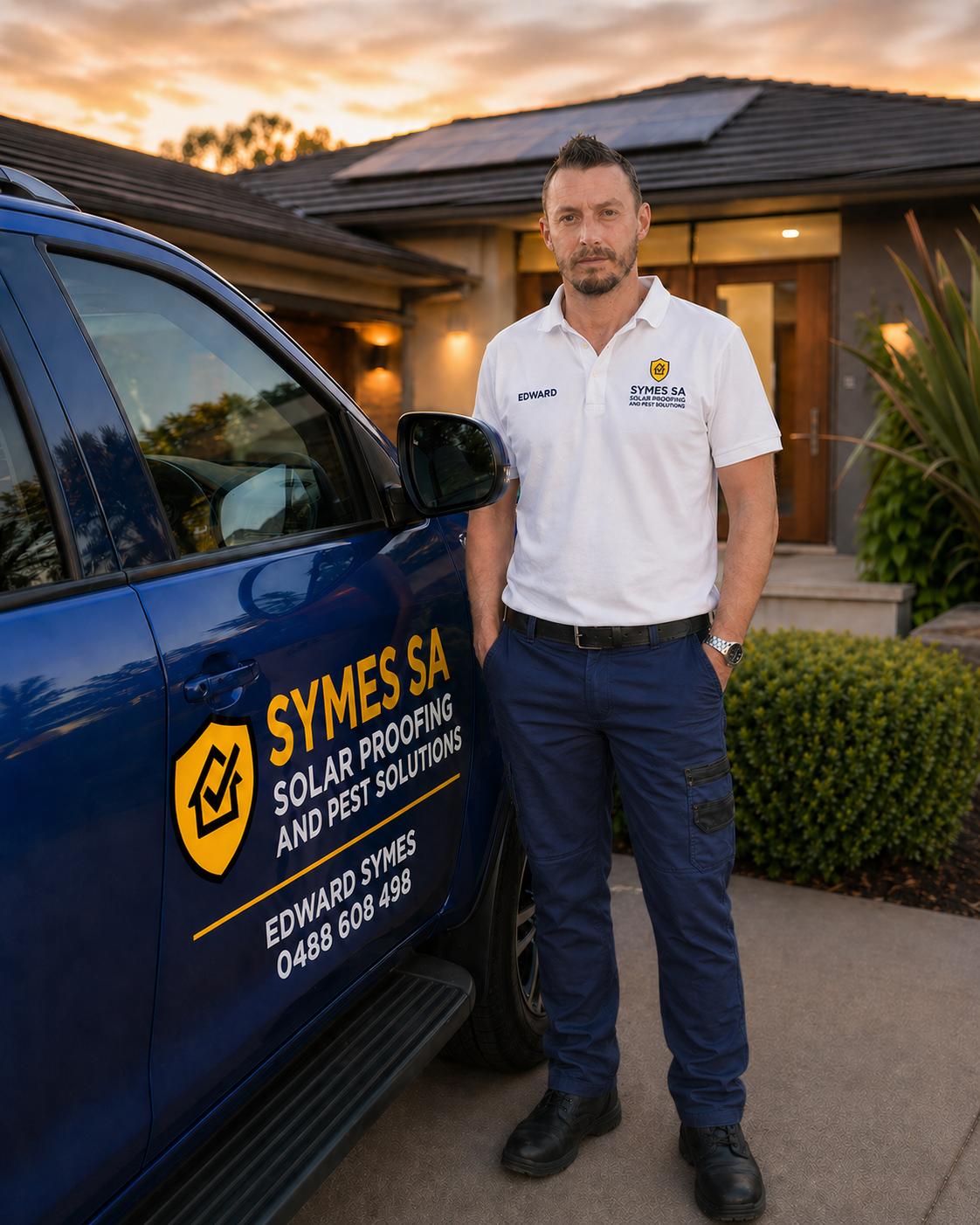 The same technician every visit
Who do we work with?
Food businesses are the core: cafes, takeaways, restaurants, bakeries, butchers and commercial kitchens that need documented cockroach, rodent and fly programs for their food safety audit. Beyond food, Symes SA looks after offices, retail, warehouses and storage, childcare centres, strata and unit blocks, and rental portfolios managed by agents.
- Cafes and takeawaysGerman cockroach and fly programs, drains and bin corrals, records for the audit.
- Restaurants and kitchensScheduled visits before or after service, equipment housings baited, deliveries area treated.
- Warehouses and storageRodent station networks, loading docks, roller doors and racking, mapped and logged.
- Offices and retailQuarterly or seasonal general treatments out of hours, ants and spiders at the perimeter.
- Childcare and schoolsLow-exposure placements, treatments timed for closures, records for the centre file.
- Strata and unit blocksCommon areas, bin rooms and shared cavities treated as one program, not unit by unit.
- Property managersEnd of lease treatments and reactive callouts across a rental portfolio, one invoice format.
- Solar and roof workBird proofing on commercial arrays, parapets and awnings, plus possum work on shop roofs.
What do food premises need for compliance documentation?
A food business in South Australia has to show its environmental health officer that pests are being controlled, and the practical evidence is a pest control file: a current program, a record of each visit stating what was treated and where, a map of bait and monitor stations, and the product information for anything used near food. Symes SA supplies all four and keeps them current.
The record has to be readable by someone who was not there. Each visit is written up on the certified taxable invoice by area: kitchen, dry store, bin corral, dining room, drains, with the stations checked and the activity found. The site map shows where every station sits, numbered, so an auditor can walk the premises and find them. Product labels and safety data are supplied for the file on the first visit and updated when anything changes.
Scheduled programs versus reactive callouts: which do you need?
A scheduled program suits any premises with a permanent pest pressure, which is every food business and most warehouses: visits at a set interval, stations checked and re-baited, records kept, problems caught while they are small. A reactive callout suits an office or a shop that has a one-off problem, a wasp nest by the door or ants in the kitchenette, and needs it dealt with once.
The program is cheaper per visit than a series of callouts and is what the audit expects. Frequency follows the pressure and the season: a kitchen is visited more often through summer, a warehouse rodent program is checked on the interval the station count and activity justify, and an office on a quarterly general treatment is left alone in between. Reactive visits still get the same record, so a one-off job on a food premises goes into the file.
What does the treatment record include?
The record is the certified taxable invoice, written for the file rather than just for payment, plus the station map. It shows the premises address, the date and time, the areas inspected and treated, the pests found and where, the product class applied to each area, the stations checked and their activity, recommendations for the operator, and the next scheduled visit.
The recommendations line is the part most operators skip and auditors read: a door seal that has worn, a drain that needs cleaning, cardboard stacked against the wall, a gap under the roller door. Writing it down protects the business, because it shows the pest controller raised it and the operator was told. Out of hours attendance is part of the same record: a visit at 6 am before a cafe opens or at 10 pm after a restaurant closes is timed to the business, within Symes SA's Monday to Saturday hours, and the time is on the invoice.
- Premises and timeAddress, date, arrival and departure time, who was on site.
- Areas inspectedKitchen, dry store, bin corral, dining, drains, dock, roof, each listed.
- FindingsPest, location and level of activity, or nil found.
- Treatment by areaProduct class and method applied to each area treated.
- StationsNumbered to the map, bait take or catch recorded per station.
- RecommendationsProofing, hygiene and structural items the operator needs to action.
- Next visitScheduled date and what it will cover.
What do rodent programs for warehouses and storage involve?
A network of lockable, tamper-resistant bait stations along the external walls, at the roller doors and docks, and inside along the racking and the wall lines, each numbered on a site map and checked on a schedule. Stations are placed where rats and mice travel, which is against walls and along the base of racking, not in the middle of the floor.
The first visit inspects the building, seals what can be sealed and sets the network. Each follow-up records bait take per station, moves stations as the activity pattern changes, and flags the door seal or the drain that is letting them in. Where a site cannot be sealed, such as a dock that is open all day, the program is what holds the population at zero, and the method is described under rat and mouse control.
What do cockroach programs for kitchens involve?
A gel bait program across every piece of equipment, the harbourages behind and under it, the dry store and the bin area, with the bait rotated between visits so German cockroaches that avoid one formulation take the next, a growth regulator so nymphs cannot breed, and monitors that show whether the harbourages are empty. Visits are timed before or after service and recorded for the audit.
Deliveries are the usual way cockroaches arrive, so the receiving area is treated and the operator is advised on cardboard. The full method, including why spray alone fails in a kitchen, is under German cockroach control, and the fly program that runs alongside it for bins, drains and the back door is under fly control.
How does commercial pricing work?
A program is quoted after a site inspection, as a per-visit rate on a set schedule, with the station count, the areas covered and the records included written into the quote. Reactive callouts are quoted per job. Either way the figure is agreed in writing before work starts, invoiced per visit on completion, and stays the same for the term unless the scope changes.
What moves a program price is the size of the premises, the number of stations the site needs, the visit frequency the audit and the season require, and whether visits have to fall outside trading hours. A small cafe on a fortnightly summer cycle and a warehouse on a monthly rodent check are priced differently for those reasons, and both see exactly what each visit includes. The wider pricing picture across Symes SA services is on the pest control cost page.
- 1Premises size and areasKitchen only, or kitchen, dining, store, dock and bin corral.
- 2Station countRodent and monitor stations set by the perimeter and the activity, mapped and numbered.
- 3Visit frequencySet by the audit and the season; heavier through summer for food premises.
- 4TimingEarly morning or late evening visits around trading, within Monday to Saturday hours.
- 5Program or calloutA scheduled program per visit, or a one-off job quoted on its own.
Commercial pest control Adelaide: what operators ask
Do you provide documentation for audits?
Yes. Every visit is recorded on the certified taxable invoice by area, with findings, product class, stations checked and recommendations, and the site carries a numbered station map plus product labels and safety data for the file. That is what an environmental health officer or a third-party auditor expects to see, and it is kept current at each visit rather than assembled when the audit is announced.
Can you attend outside trading hours?
Yes, within Symes SA's Monday to Saturday hours. Cafes and restaurants are usually visited early in the morning before opening or late in the evening after close, so the kitchen is treated and dry before service. Symes SA is a single-technician business and does not run a 24-hour call line; the honest position is early and late visits by arrangement, with the time recorded on the invoice.
How often should a cafe be treated?
On a schedule set by the pressure and the season rather than a fixed rule, which for most Adelaide cafes means more frequent visits through summer when cockroaches and flies breed in days, and fewer through winter. A kitchen with a German cockroach history starts on a tighter cycle until the monitors are clear. The interval is written into the program and reviewed from what each visit finds.
Do you service strata and unit blocks?
Yes. Common areas, bin rooms, car parks, shared cavities and service ducts are treated as one program, because cockroaches and rodents move between units along the pipes and the block cannot be cleared one unit at a time. Individual unit treatments are added where a resident or the manager asks, and the body corporate receives the same invoice record and station map as any commercial site.
Audit coming up and no pest file? Start the program.
Site inspected, stations mapped, visits scheduled around trading, every visit on record. One technician who knows your premises.