
Dead Possum Removal in Adelaide
Dead possum removal Adelaide homes ring about almost always starts the same way: a smell that appeared a few days ago in one room and is now impossible to live with. Symes SA tracks the carcass to the roof, wall or subfloor, takes it out, treats the spot, deals with the flies and mites that follow, and closes the gap it used.
- LocateSmell, fly and stain tracking
- RemoveCarcass bagged and taken away
- TreatDeodorise and sanitise the spot
- Follow-upFlies and mites dealt with
- PreventEntry gap sealed
Where is it: roof, wall cavity or subfloor?
The smell tells you the room; the flies and the stain tell you the spot. Edward walks the house sniffing at ceiling corners, along skirtings and at power points, watches where blowflies gather on the glass, and looks for the brown patch that forms on plaster directly under a carcass.
- Roof spaceStrongest at the ceiling in one room, flies at the highest window, sometimes a damp stain on the plaster. Found by torch through the manhole, usually near the entry point.
- Wall cavityA possum that dropped between the studs and could not climb out. The smell is sharpest at one point on the wall, and flies emerge at the skirting or a power point below it.
- SubfloorSmell rises through floorboard gaps and is worse at floor level. Reached through the access hatch or a vent, often near a pier.
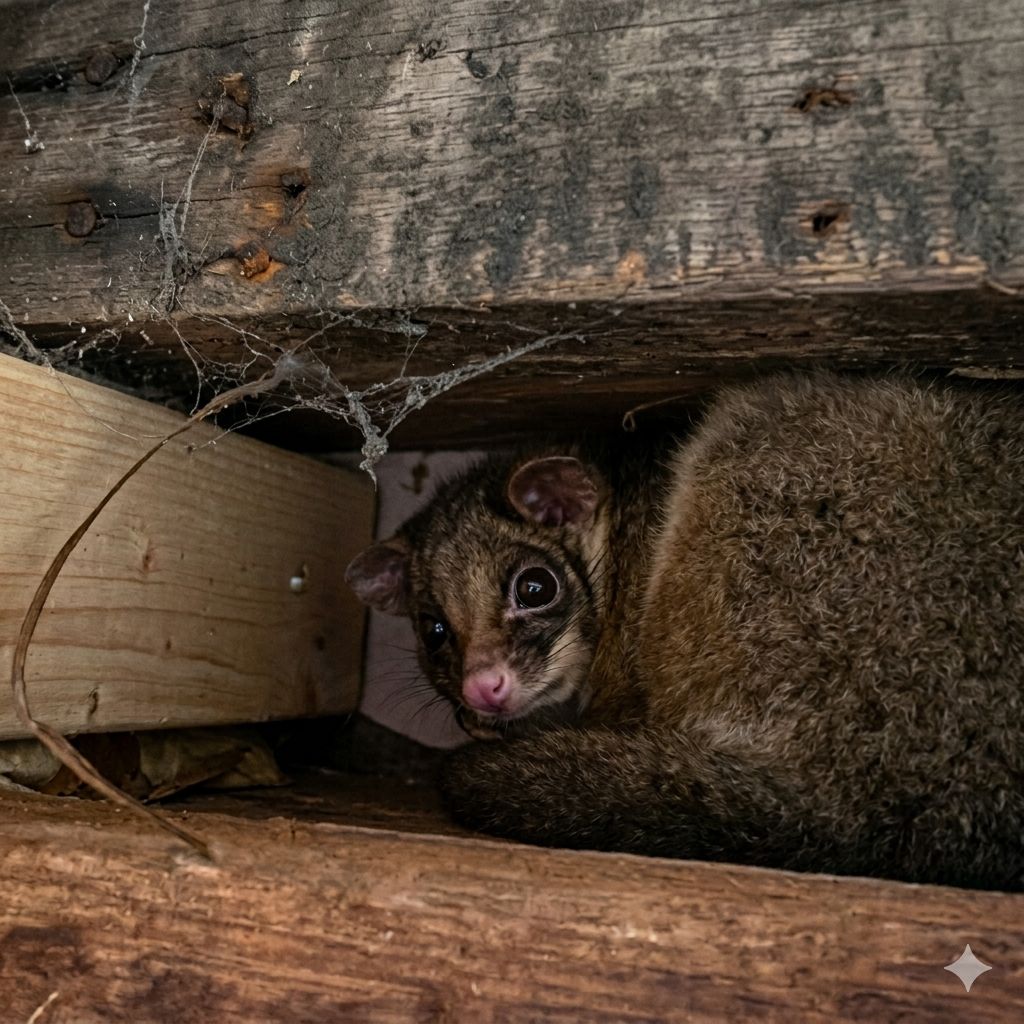 Roof timbers, Adelaide
Why does the smell get worse before it gets better?
An adult brushtail is a few kilograms of animal, and an Adelaide roof space in summer sits far above the outside temperature. Decomposition accelerates in that heat, so the smell that was faint on day one is overpowering by day three or four and stays there for well over a week before it starts to fade. Left alone it eventually goes, but the stain, the flies and the mites do not go with it.
The reason to act on day two rather than day ten is not only comfort. While the carcass is wet, it is feeding blowflies, and the maggots they leave behind become the next generation of flies inside your house.
What does removal, deodorising and sanitising involve?
- Carcass outLifted with gloves into a sealed bag and taken off site. Any joey found with it is checked and, if alive, handed to wildlife care.
- Contaminated material outInsulation, nesting material and any plaster or timber that has absorbed fluid is bagged and removed with it. Replacing insulation is quoted separately.
- Deodorise and sanitiseThe spot and the surrounding timbers are treated with a deodorising and sanitising spray so the odour source is neutralised rather than masked.
What about the flies and mites that come after?
Blowflies find a dead animal within hours and lay on it. A week later the maggots pupate and the new flies come out of the ceiling vents, the downlights and the gap under a door. Mites that lived on the possum leave the cold body and look for a warm one, and the nearest is often a person sleeping in the room below.
Both are treated on the same visit where already present, and quoted as a follow-up where they are not. A fly emergence is handled by treating the roof space and the emergence points; the wider approach is on the fly control page. Bites at night after a possum has died in the roof are handled like the bird mite cases under bird mite treatment: treat the cavity, not just the bedroom.
Will you need to cut into the ceiling or wall?
Usually not for a roof, because the manhole gets Edward to most of the roof space and the carcass is found by torch. A wall cavity is different: a possum wedged between studs can only come out through an opening, and that is cut at the base of the wall at the smell point, kept small and square so it can be patched. Nothing is cut without your agreement and a price first.
Where a cut is needed it goes low on the wall, away from tiles and cornices, at the smallest size the job allows. Whether the patch is included in the quote or left to your own tradesperson is stated in writing before the hole is made, so there is no surprise on the invoice.
How is the entry point sealed so it does not happen again?
A possum that died in your roof got into your roof, and the gap is still open. Once the carcass is out, Edward finds that gap, closes the main one on the visit and tells you about any others. A roof that has already had one possum die in it is a roof that will host the next one within the season unless the openings are dealt with.
The sealing is the same work described on the roof possum proofing page, and a live possum that is still coming and going is handled as a possum removal first.
What does dead possum removal cost?
It is priced on the visit after the carcass has been located, because the cost depends on where it is and what it takes to reach it. A roof job through the manhole is the simplest. A wall cavity that needs an opening, a subfloor with poor access, soaked insulation to remove, or a fly and mite treatment on top each add to it.
- Quoted before it is opened upLocate first, figure second, work third.
- Itemised on the invoiceRemoval, treatment, any cutting, any follow-up, GST shown, on the certified taxable invoice.
- Paid on completionPayment once the source is out and the spot is treated.
Dead possum removal Adelaide: what people ask with the windows open
How long does the smell last?
With the carcass left in place, the strong phase runs a week or more in warm weather and tails off over the following two to three weeks, longer if the animal is lying on insulation that has soaked through. Once the carcass and the wet material are removed and the spot is treated, most homes notice a real drop the same day and are clear within a few days as the cavity airs out.
Can you find it if I cannot?
Yes, in almost every case. Edward works from the strongest point of the smell, the fly activity and any staining, and knows where possums sleep and fall: near the entry gap, in the warmest corner of the roof, at the base of a wall cavity, beside a subfloor pier.
Will you need to cut into the ceiling?
Rarely for a ceiling, because the roof space is reached through the manhole. A wall cavity does need an opening, cut at the base of the wall where the smell is strongest, small and square so a plasterer can patch it. You agree to the cut and its price first, and the quote says whether patching is included.
What about the maggots and flies?
They are part of the job. Maggots go out with the carcass and the material under it, the roof space is treated so the flies that have already pupated do not emerge into the house, and the vents, downlights and door gaps they use are checked.
Something has died in the roof. Get it out today, and the smell with it.
Located, removed, treated, entry gap closed. Quote before anything is opened.